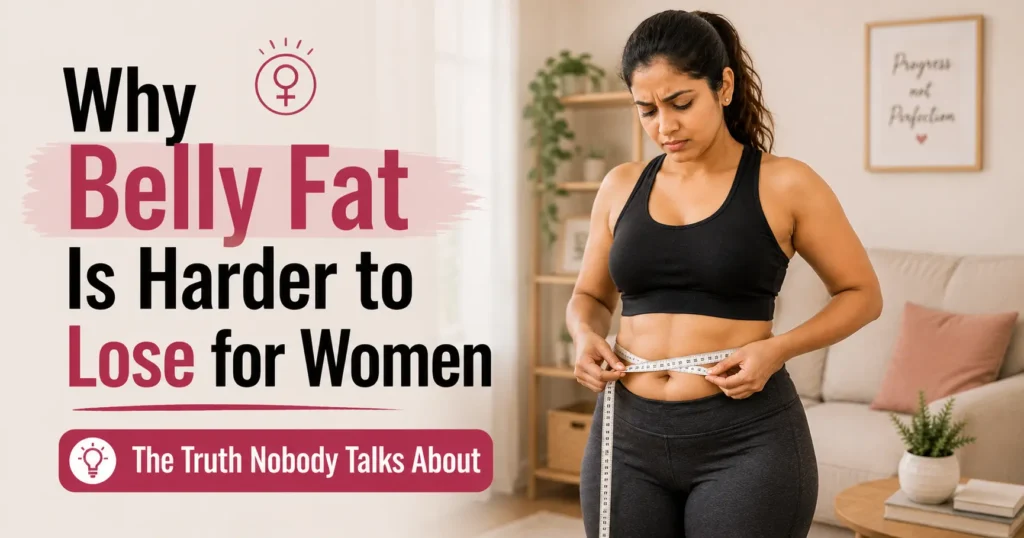
Why Belly Fat Is Harder to Lose for Women

woman struggling with stubborn belly fat during weight loss

You start eating healthier.
You begin walking daily.
You even exercise consistently for weeks.

At first, you expect your stomach area to shrink quickly.

But then something frustrating happens.

Your face looks slimmer.
Your arms feel lighter.
Maybe your clothes fit slightly better.

Yet belly fat barely changes.

Naturally, you start wondering:

  • “Why is belly fat so stubborn?”
  • “Why does it disappear everywhere except my stomach?”
  • “Am I doing something wrong?”

If you feel this way, you’re not alone.

For many women, belly fat is often the slowest fat to disappear. And honestly, there are real biological and lifestyle reasons behind it.

The good news is:
You do not need extreme diets, endless cardio, or unrealistic “flat stomach in 7 days” plans.

Instead, you need a realistic understanding of how women’s bodies store and lose fat.

Let’s break it down properly.

Why Women Store Belly Fat Differently

Women’s bodies are naturally designed to store fat differently than men.

Hormones, reproduction, energy storage, and metabolism all play a role.

As a result, women often carry more fat around:

  • the lower stomach
  • hips
  • thighs
  • waist area

This is completely normal.

Unfortunately, social media often creates unrealistic expectations by promoting edited bodies, crash diets, and extreme transformations.

That makes many women feel like their body is “failing” when belly fat does not disappear quickly.

In reality, your body is simply protecting stored energy.

According to the Cleveland Clinic, body fat distribution is strongly influenced by hormones, genetics, and age.

Hormones Play a Huge Role in Belly Fat

woman dealing with hormonal belly fat


Hormones affect:

  • appetite
  • cravings
  • metabolism
  • fat storage
  • energy levels

Therefore, hormonal changes can make belly fat harder to lose.

This becomes especially noticeable during:

  • PCOS
  • stress
  • pregnancy recovery
  • poor sleep
  • menstrual cycle fluctuations

Cortisol and Belly Fat

Cortisol is often called the “stress hormone.”

When stress stays high for long periods:

  • cravings increase
  • emotional eating becomes common
  • sleep quality drops
  • fat storage may increase around the stomach

That’s one reason many women notice belly fat increasing during stressful phases of life.

Estrogen Changes Matter Too

Hormonal shifts can also influence where fat is stored.

This is why women sometimes experience:

  • bloating
  • water retention
  • stubborn lower belly fat

Even when they are exercising regularly.

👉 You may also like:
Why You’re Not Losing Weight Even After Daily Exercise

Belly Fat Is Not Only About Exercise

This is where many people get frustrated.

They think:

“If I do more workouts, belly fat will disappear faster.”

Unfortunately, the body does not work that way.

You cannot choose exactly where your body loses fat first.

Spot Reduction Is Mostly a Myth

Doing endless:

  • crunches
  • ab workouts
  • stomach exercises

…does not directly burn belly fat from one specific area.

Instead, fat loss happens gradually across the whole body.

For some women:

  • arms slim first
  • face changes first
  • waist changes slowly

That’s completely normal.

Poor Sleep Can Make Belly Fat Worse

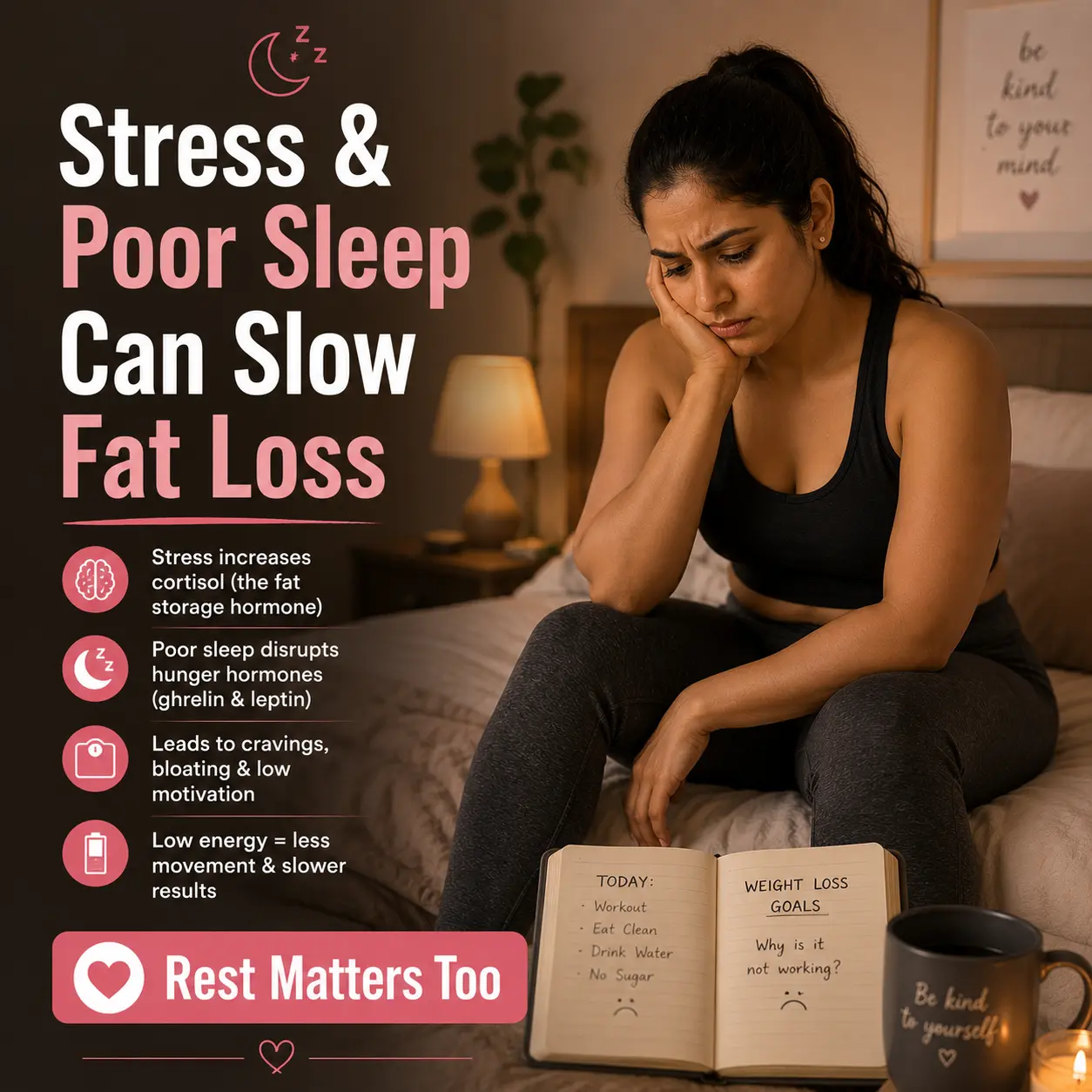
stressed tired woman struggling with belly fat


Sleep affects weight loss much more than most people realize.

When sleep quality drops:

  • hunger hormones increase
  • cravings become stronger
  • energy decreases
  • recovery slows down

As a result, fat loss becomes more difficult.

Signs Poor Sleep Is Affecting You

  • late-night cravings
  • fatigue
  • bloating
  • constant hunger
  • low motivation

Even with exercise, poor sleep can slow progress significantly.

Harvard Medical School also explains that poor sleep may affect appetite regulation and long-term weight management.

Extreme Dieting Often Makes Things Worse

Many women panic when belly fat does not disappear quickly.

Then they try:

  • starving themselves
  • skipping meals
  • detox teas
  • very low-calorie diets

This usually backfires.

Why Crash Diets Fail

Extreme dieting can:

  • increase stress
  • slow metabolism
  • increase cravings
  • reduce muscle mass
  • create binge eating cycles

As a result, fat loss becomes harder to maintain long-term.

The goal should not be:

“Lose weight as fast as possible.”

The goal should be:

“Build habits that actually last.”

Belly Fat and Water Retention Are Different

Sometimes what feels like belly fat is actually:

  • bloating
  • water retention
  • digestive discomfort

That’s why stomach size can fluctuate daily.

For example:

  • salty foods
  • hormonal changes
  • stress
  • poor digestion

…can temporarily increase bloating.

This does not automatically mean body fat increased.

👉 You may also enjoy reading:
Why the Scale Lies About Your Fat Loss Progress

What Actually Helps Reduce Belly Fat

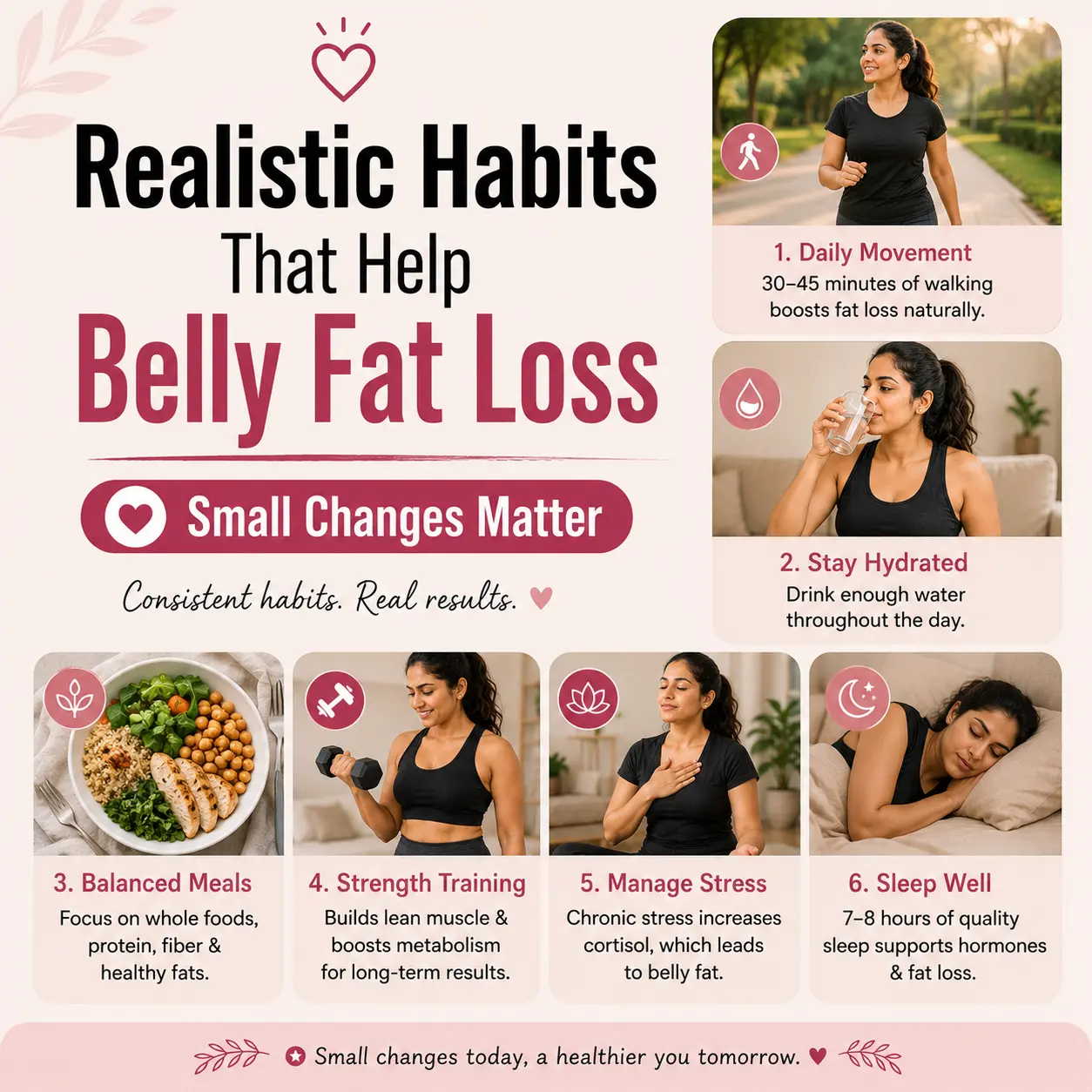
realistic healthy habits for belly fat loss


Now let’s focus on what truly helps.

Not fake shortcuts.

Not “flat tummy hacks.”

Real sustainable habits.

1. Consistent Movement

You do not need extreme workouts.

However, regular movement matters.

Helpful activities include:

  • walking
  • strength training
  • low-impact workouts
  • treadmill walking
  • mobility exercises

Consistency matters far more than perfection.

👉 Related read:
5 Walking Mistakes That Stop Weight Loss

2. Strength Training Helps More Than Most Women Think

woman doing beginner strength training at home


Many women avoid strength training because they fear becoming “bulky.”

In reality, strength training:

  • improves metabolism
  • supports fat loss
  • preserves muscle
  • improves body shape

And honestly, it’s one of the best long-term strategies for belly fat reduction.

You do not need heavy gym workouts either.

Simple home exercises help too.

👉 You may also like:
Low-Impact Home Workout for Weight Loss (No Jumping)

3. Protein Helps Control Hunger

Protein helps:

  • improve fullness
  • reduce cravings
  • support muscle recovery

Simple protein sources include:

  • paneer
  • eggs
  • curd
  • lentils
  • tofu
  • sprouts

Balanced eating works much better than starvation.

👉 You can also read:
Healthy Indian Diet Plan for Weight Loss (7 Days)

4. Stress Management Matters

This part is often ignored.

However, chronic stress affects:

  • eating habits
  • hormones
  • sleep
  • motivation

Helpful stress-management habits include:

  • evening walks
  • journaling
  • stretching
  • meditation
  • reducing screen time before bed

Small habits matter.

5. Patience Is Necessary

This is the hardest part emotionally.

Belly fat often reduces slowly.

That does not mean your body is broken.

Real transformation usually takes:

  • weeks
  • months
  • consistency

Social media often hides this reality.

Signs Your Belly Fat Is Actually Reducing

Sometimes progress starts before it becomes visually dramatic.

Positive signs include:

  • reduced bloating
  • better posture
  • looser clothes
  • improved stamina
  • better digestion
  • smaller waist measurements

These changes matter too.

Mistakes That Make Belly Fat Harder to Lose

Many people unknowingly slow their own progress.

Common mistakes include:

  • sleeping too little
  • relying only on cardio
  • crash dieting
  • chronic stress
  • inconsistent routines
  • emotional eating
  • expecting overnight results

Avoiding these habits helps much more than chasing “magic” solutions.

When You Should Seek Medical Advice

Sometimes stubborn belly fat may connect with:

  • PCOS
  • thyroid issues
  • insulin resistance
  • hormonal imbalance

If progress feels impossible despite consistent healthy habits, medical guidance can help.

There is nothing wrong with checking your health properly.

Frequently Asked Questions

Hormones, stress, genetics, and fat distribution patterns make belly fat more stubborn for many women.

Walking supports overall fat loss and daily movement, which can help reduce belly fat gradually over time.

No. Spot reduction is mostly a myth. Overall fat loss and healthy habits matter more.

High stress may increase cortisol levels, cravings, and fat storage around the stomach area.

Fat loss speed varies for everyone. Sustainable belly fat reduction usually takes consistent habits over several weeks or months.

Final Thoughts

Belly fat is frustrating because it often changes slowly.

However, slow progress does not mean failure.

Your body is influenced by:

  • hormones
  • sleep
  • stress
  • lifestyle habits
  • consistency

So instead of punishing your body, try supporting it better.

Move consistently.
Eat balanced meals.
Sleep properly.
Manage stress.

And most importantly:
Stop expecting overnight transformation.

Healthy fat loss is usually slower than social media promises — but it’s also far more sustainable.

Leave a Comment

Your email address will not be published. Required fields are marked *

Scroll to Top