
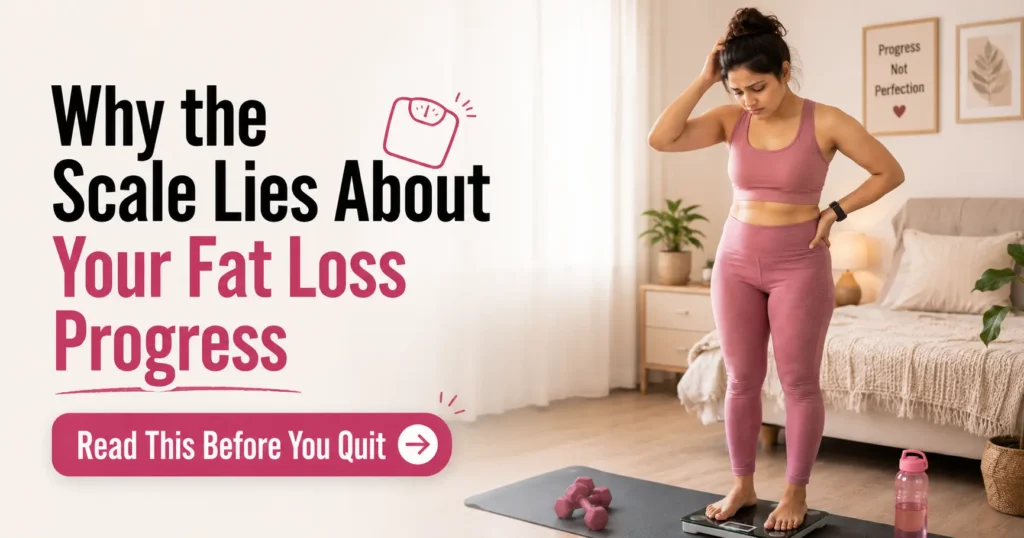
1. Water Retention Changes Weight Daily
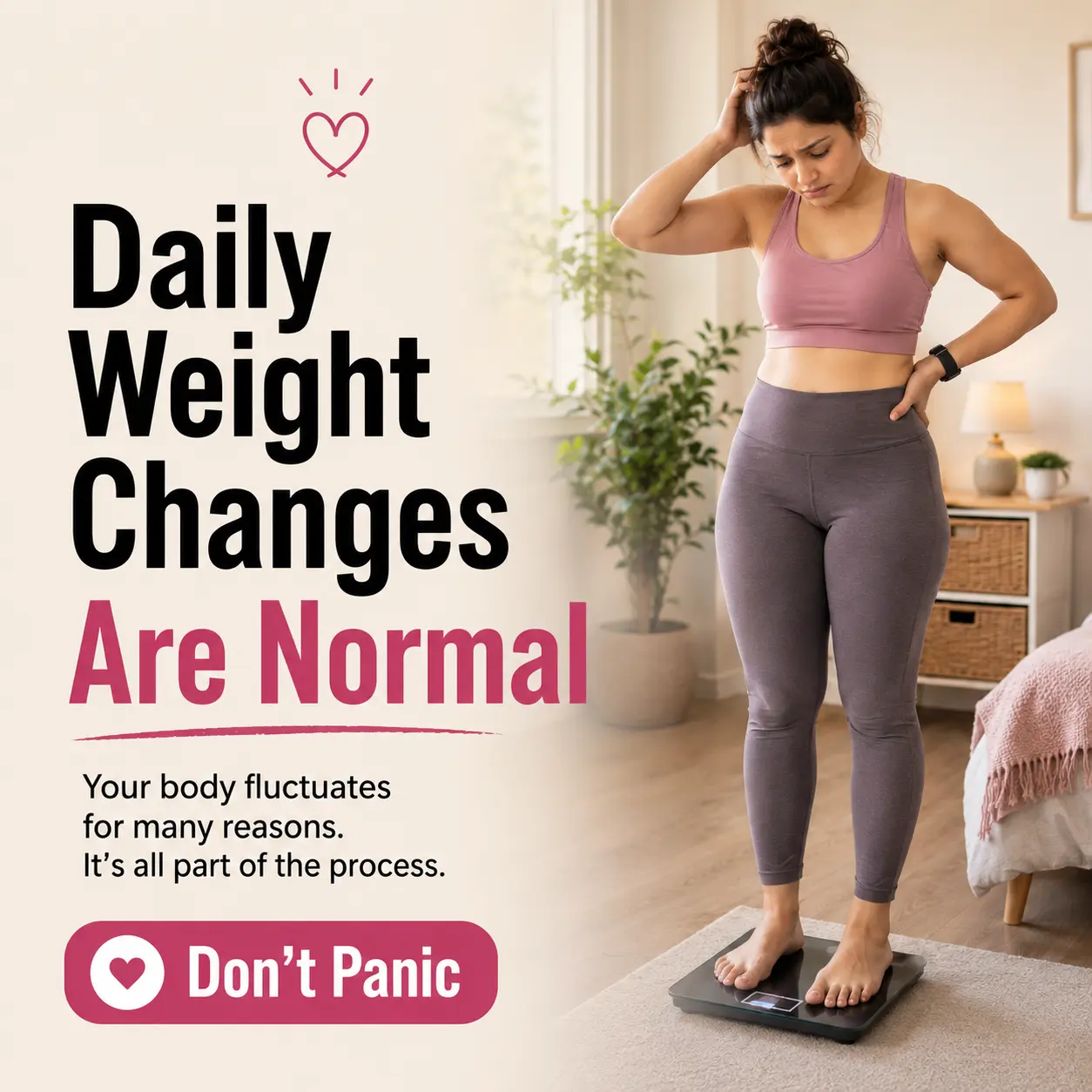
This is one of the biggest reasons the scale feels confusing.
Your body naturally stores and releases water constantly.
As a result, your weight can change:
- overnight
- after salty meals
- during stress
- after workouts
- during menstrual cycles
Sometimes the scale increases even when fat loss is happening.
Why This Happens
Exercise causes small muscle stress and inflammation. Therefore, your body temporarily holds more water during recovery.
Similarly, eating more sodium or carbohydrates can also increase water retention for a short time.
That doesn’t mean you gained fat overnight.
Real fat gain happens much more slowly.
What You Should Do Instead
Instead of checking weight emotionally:
- weigh yourself at the same time daily
- track weekly averages
- focus on long-term trends
Daily fluctuations are normal.
2. Muscle Gain Can Hide Fat Loss
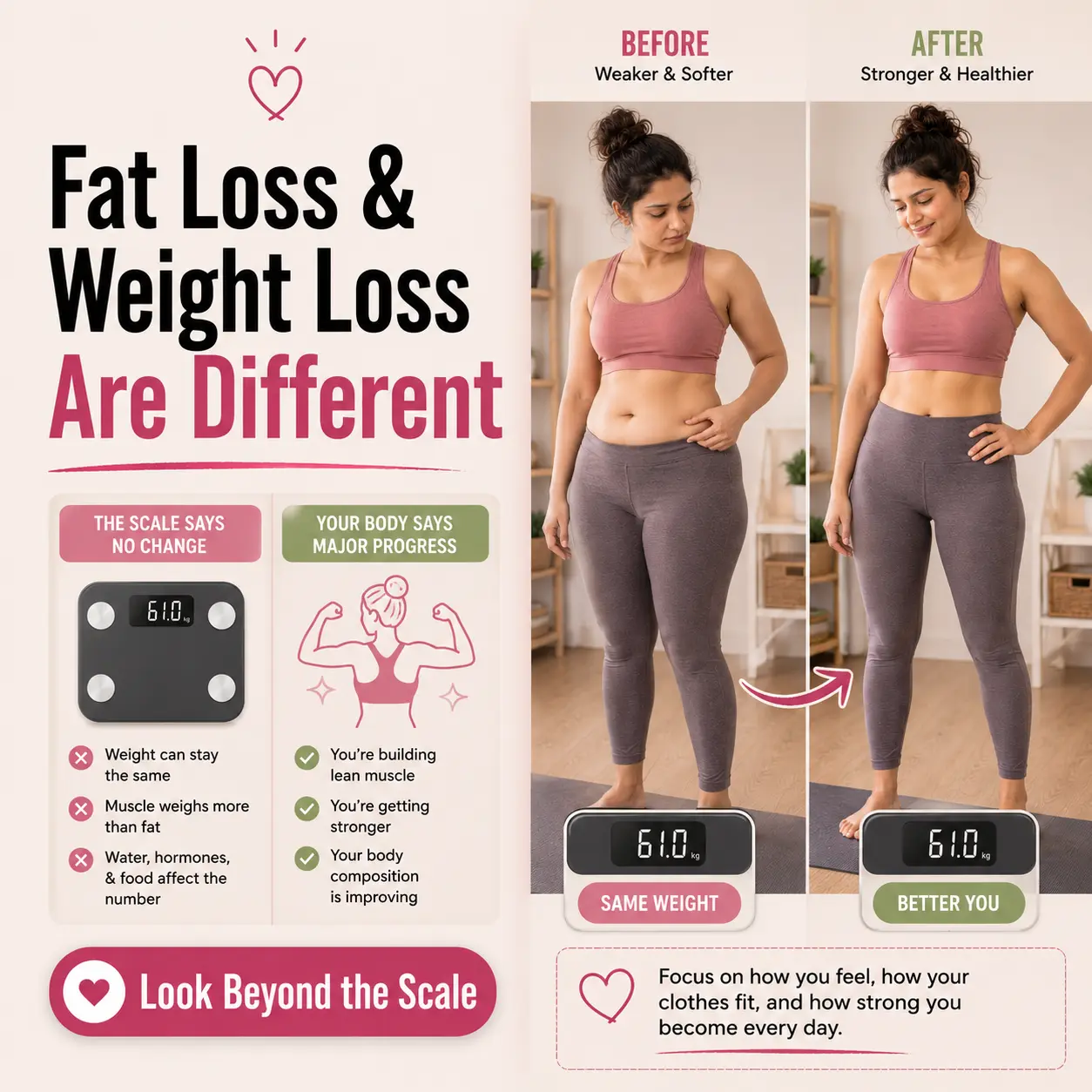
Many beginners expect the scale to drop quickly after starting workouts.
However, when you exercise regularly, your body may start building muscle while losing fat.
This is especially common if:
- you recently started strength training
- you were previously inactive
- you increased protein intake
Why Muscle Changes the Scale
Muscle is denser than fat.
That means:
- your body may look leaner
- clothes may fit better
- inches may reduce
…even if the scale barely changes.
This is why body composition matters more than body weight alone.
👉 You may also like:
Fat Loss vs Weight Loss: Which One Should You Focus On?
(Add internal link here)
3. Hormones Affect Scale Weight
Hormones play a huge role in weight fluctuations, especially for women.
During certain phases of the menstrual cycle, many women naturally retain more water and feel bloated.
As a result:
- weight temporarily increases
- the stomach feels puffier
- clothes may feel tighter
This is completely normal.
Other Hormonal Factors That Affect Weight
Conditions like:
- PCOS
- thyroid imbalance
- insulin resistance
- chronic stress
…can also affect how the body stores fat and water.
Therefore, comparing your daily scale number without considering hormones can become misleading.
According to the Mayo Clinic, hormones and metabolism strongly influence body weight and energy balance.
4. Digestion and Salt Intake Matter More Than You Think
Sometimes the scale changes because your body is still digesting food.
Yes, it’s that simple.
For example:
- eating late at night
- consuming heavy meals
- eating salty foods
- low water intake
…can temporarily increase body weight.
That increase is not necessarily body fat.
Why Salt Matters
High sodium intake encourages water retention.
Therefore, after eating:
- restaurant food
- packaged snacks
- fast food
…the scale may rise temporarily.
This often creates unnecessary panic.
Instead of reacting emotionally, look at your habits over several weeks.
5. Stress and Poor Sleep Affect Weight Fluctuation
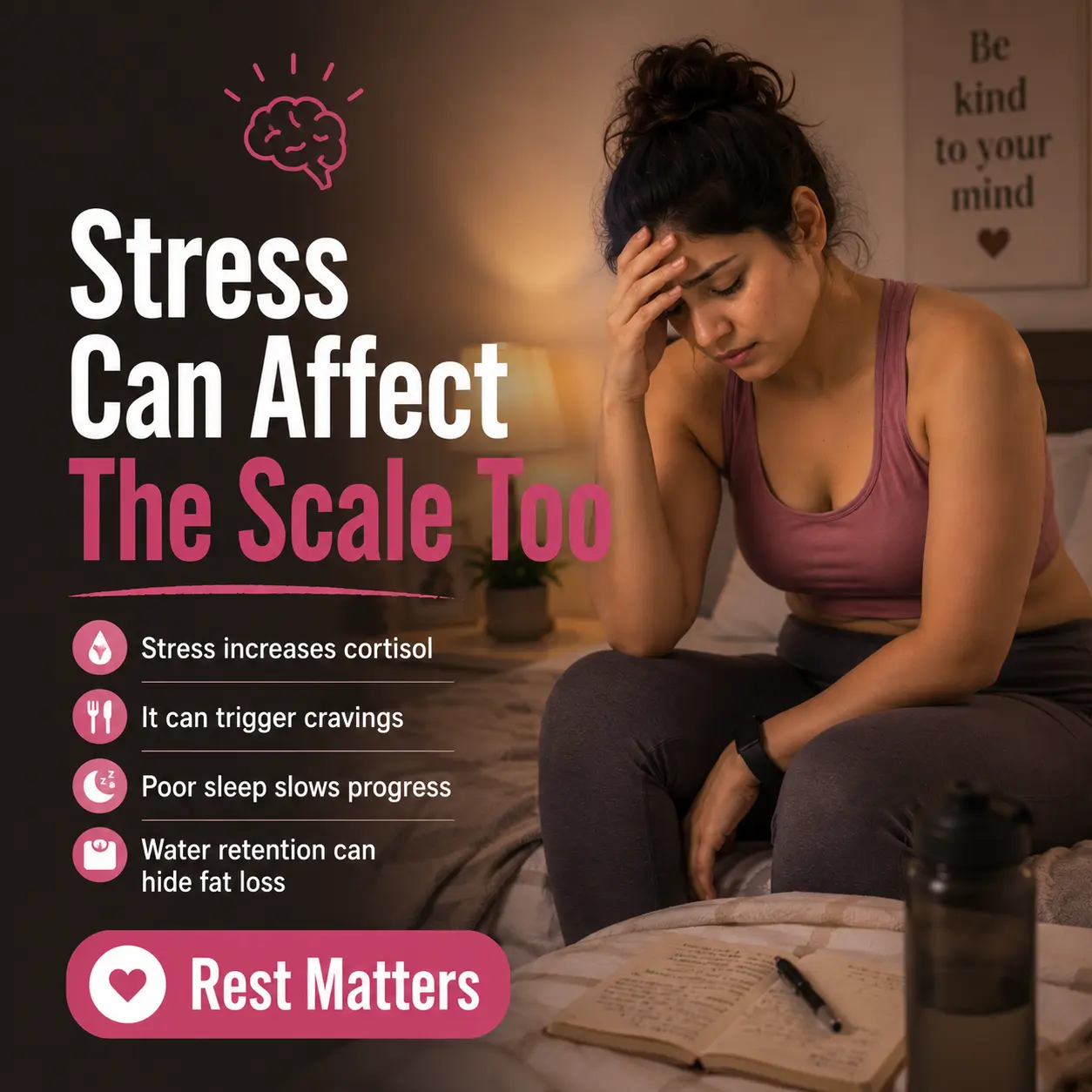
Stress affects more than mood.
It also affects:
- hunger
- cravings
- hormones
- recovery
- water retention
Similarly, poor sleep can make the body feel more inflamed and tired.
As a result, weight fluctuations become more noticeable.
Signs Stress May Be Affecting Progress
- bloating
- emotional eating
- fatigue
- increased cravings
- poor recovery
This is why sustainable fat loss requires recovery too.
Harvard Medical School also explains that poor sleep may affect appetite hormones and weight management.
6. The Scale Cannot Measure Fitness Improvements
This is something many people forget.
The scale cannot measure:
- stamina
- strength
- endurance
- flexibility
- confidence
- energy levels
However, those improvements matter.
For example:
You may now:
- walk longer without getting tired
- sleep better
- feel more active
- recover faster
- move more comfortably
Those are real signs of progress too.
Unfortunately, people often ignore them because they are too focused on scale weight.
Better Ways to Track Fat Loss Progress
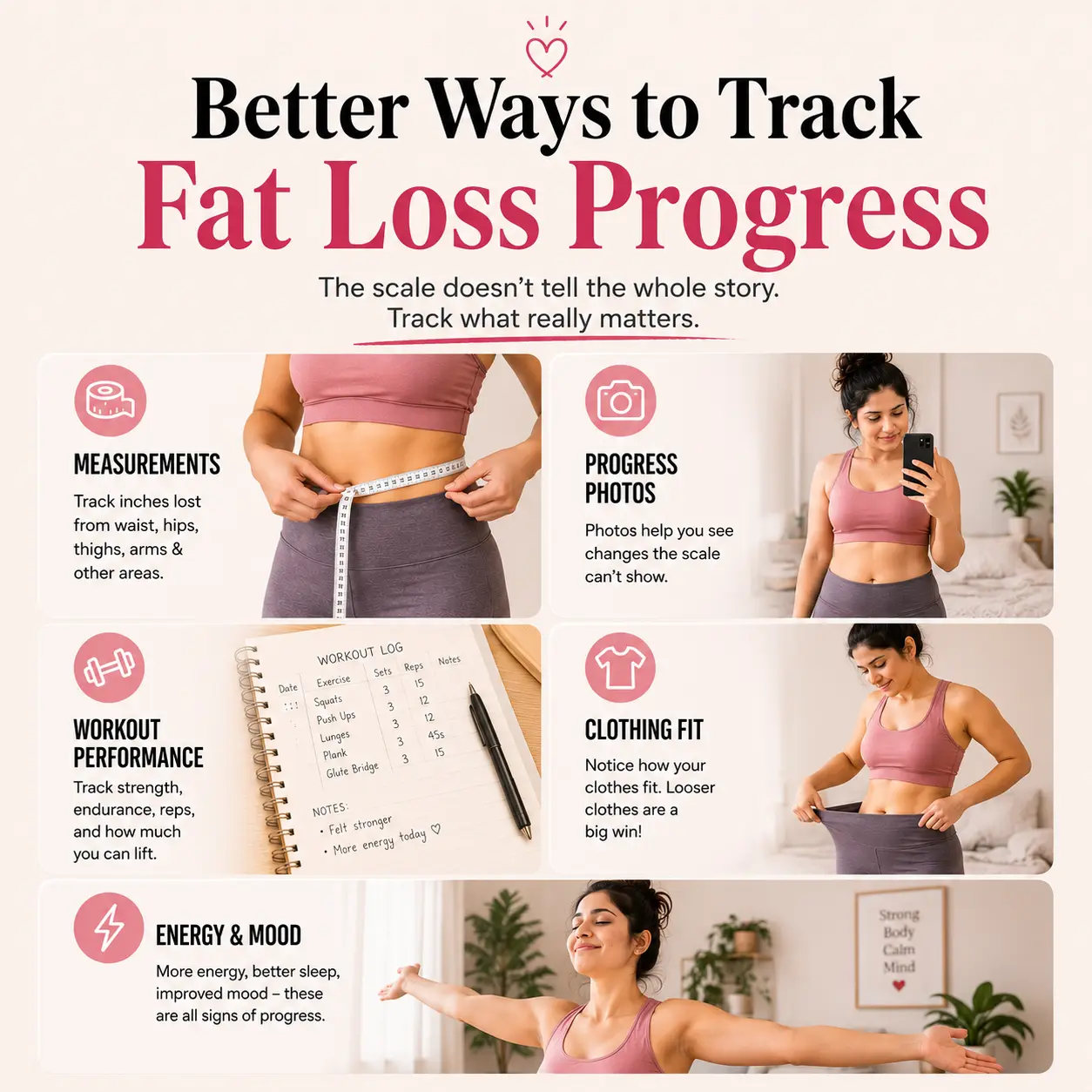
If the scale is not fully reliable, what should you track instead?
Here are smarter options.
1. Progress Photos
Photos reveal changes the scale often misses.
Take photos:
- monthly
- in similar lighting
- wearing similar clothes
Small body changes become easier to notice visually.
2. Body Measurements
Track:
- waist
- hips
- thighs
- arms
Sometimes inches reduce even when weight stays stable.
3. Energy Levels
Ask yourself:
- Do I feel stronger?
- Am I less tired?
- Is movement easier now?
These are important improvements.
4. Clothing Fit
This is one of the best indicators of fat loss.
If clothes fit better, your body is changing.
Even when the scale disagrees.
5. Workout Performance
Can you:
- walk longer?
- lift more?
- recover faster?
- complete workouts easier?
That’s progress.
👉 You may also enjoy reading:
Why Home Workouts Don’t Show Results Fast