5 Walking Mistakes That Stop Weight Loss

woman walking for weight loss outdoors

Walking is often called one of the easiest ways to lose weight — and honestly, it is. It’s simple, beginner-friendly, low-impact, and doesn’t require expensive equipment or a gym membership.

But here’s the frustrating part:

Many people walk every single day and still don’t see any real changes in their weight.

If that sounds familiar, you’re probably not failing because walking “doesn’t work.” You’re likely making a few common mistakes that quietly slow down your progress.

The good news? Most of these mistakes are easy to fix.

In this guide, we’ll break down the biggest walking mistakes that stop weight loss, explain why they matter, and show you how to make your daily walks more effective without making your routine complicated.

Why Walking Alone Sometimes Doesn’t Work for Weight Loss

Walking helps burn calories, improve heart health, reduce stress, and increase daily movement. But weight loss depends on more than just “moving a little.”

Many people overestimate how many calories walking burns and underestimate how much food, inactivity, poor sleep, or inconsistency affects results.

For example, a slow 15-minute walk followed by sugary snacks and long sitting hours won’t create enough calorie burn to support fat loss.

That doesn’t mean walking is useless. It simply means you need to walk smarter.

According to the World Health Organization (WHO), regular physical activity helps reduce the risk of obesity and supports overall physical and mental health.

Mistake #1: Walking Too Slowly

One of the most common walking mistakes for weight loss is walking at a pace that barely raises your heart rate.

A casual stroll is still healthy, but if your goal is fat loss, your body needs a little more challenge.

How to Know If Your Pace Is Too Slow

During your walk:

  • You should breathe slightly heavier
  • You should still be able to talk
  • But singing comfortably should feel difficult

This is often called a “brisk walking pace.”

Why Speed Matters
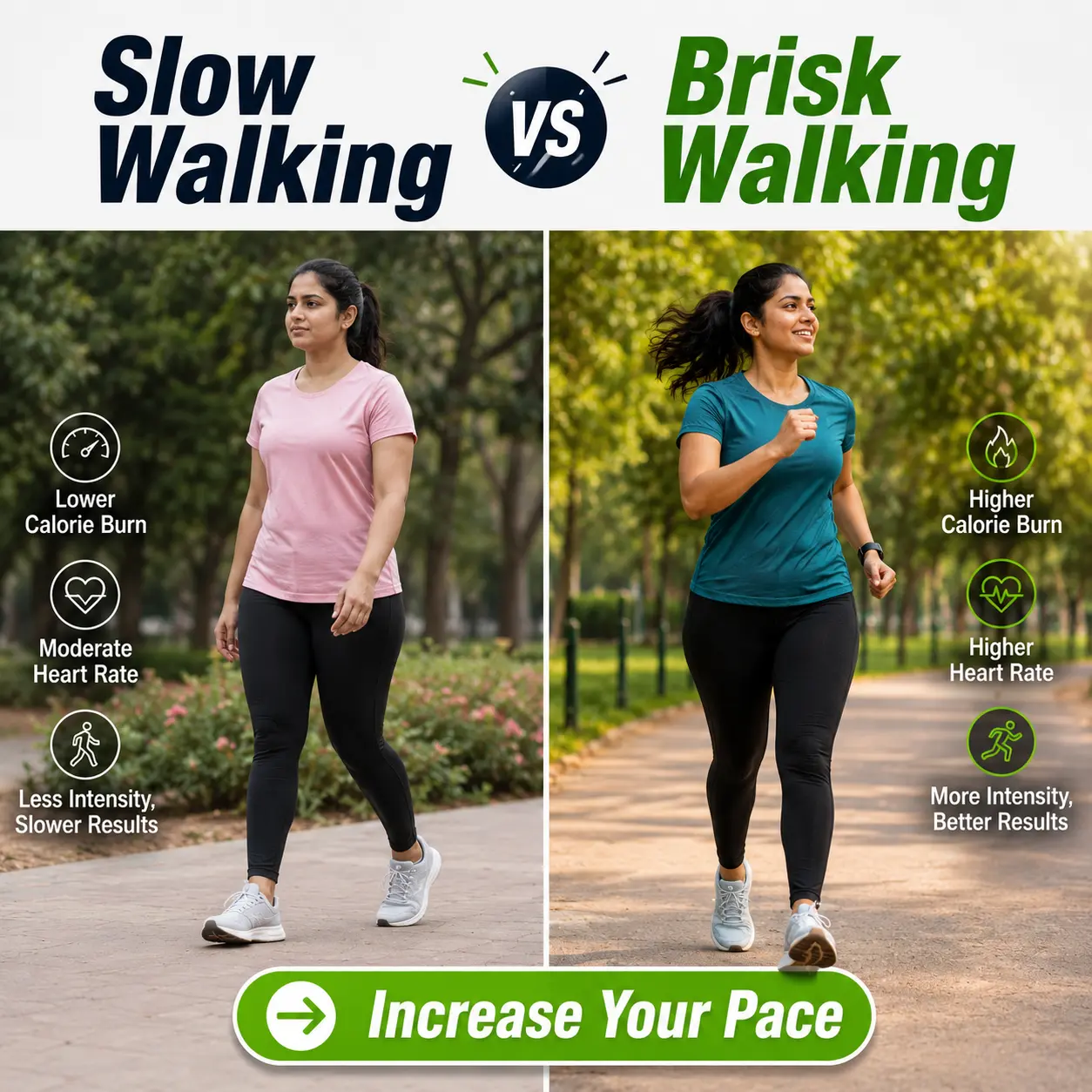
woman doing brisk walking for fat loss


Walking faster increases:

  • Calorie burn
  • Heart rate
  • Fat-burning potential
  • Overall workout intensity

Even a small increase in pace can make a noticeable difference over time.

What You Should Do Instead

Try:

  • Brisk walking for 30–45 minutes
  • Adding short fast intervals
  • Walking uphill or on an incline treadmill

If you’re a beginner, don’t suddenly force intense walking. Increase your pace gradually.

Mistake #2: Being Inconsistent

Walking once or twice a week won’t create significant weight loss results.

Consistency matters far more than occasional “perfect” workouts.

A lot of people walk:

  • 1 hour one day
  • Skip 4 days
  • Restart next week

That cycle kills momentum.

Why Consistency Is More Important Than Intensity

Your body responds to repeated habits.

Walking regularly:

  • Increases daily calorie burn
  • Improves stamina
  • Builds healthier routines
  • Supports metabolism over time

Even 30 minutes daily works better than 2 hours once a week.

Simple Way to Stay Consistent

Instead of aiming for huge goals:

  • Start with 20–30 minutes
  • Walk after meals
  • Pick a fixed time daily
  • Track steps realistically

A sustainable routine always beats an extreme plan.

Mistake #3: Ignoring Your Diet

This is probably the biggest reason walking for weight loss “fails.”

Many people assume:

“I walked today, so I can eat anything.”

Unfortunately, it doesn’t work like that.

You can easily consume more calories than you burn during a walk.

For example:

  • A 40-minute walk may burn around 150–250 calories
  • A sugary coffee + snacks can exceed that quickly

Walking Cannot Fully Compensate for Poor Eating Habits

healthy diet with walking for weight loss


You don’t need a crash diet, but you do need awareness.

Focus on:

  • Portion control
  • More protein
  • Fiber-rich meals
  • Less sugary drinks
  • More water

Simple home-cooked meals often work better than fancy “diet foods.”

Helpful Tip

Combine walking with a balanced eating plan instead of extreme restriction.

👉 You can also read our Healthy Indian Diet Plan for Weight Loss (7 Days) for simple meal ideas that support fat loss naturally.

Mistake #4: Walking for Too Little Time

A short walk is still beneficial, but many people expect major weight loss from 10 minutes of slow walking.

Realistically, fat loss usually requires:

  • More movement
  • Longer consistency
  • Enough total activity

How Long Should You Walk for Weight Loss?

For most beginners:

  • 30–45 minutes daily is a good target
  • Or 7,000–10,000 daily steps

You don’t have to do it all at once.

You can split walks:

  • Morning walk
  • After lunch
  • Evening walk

This is often easier for busy people.

Walking After Meals Helps

A short walk after meals can:

  • Support digestion
  • Help blood sugar control
  • Reduce bloating
  • Increase daily movement naturally

This simple habit is underrated.

Mistake #5: Doing Only Walking and Nothing Else

Walking is excellent, but relying only on walking for months may slow your progress eventually.

Your body adapts.

Adding even small amounts of strength training helps:

  • Build muscle
  • Improve metabolism
  • Increase calorie burn
  • Shape the body better

You Don’t Need Heavy Gym Workouts

Simple home exercises work too:

  • Squats
  • Wall push-ups
  • Resistance band workouts
  • Low-impact home workouts

Even 2–3 strength sessions weekly can improve results significantly.

👉 You can also try our Low-Impact Home Workout for Weight Loss (No Jumping) if you want beginner-friendly exercises at home.

How to Make Walking More Effective for Fat Loss

Now let’s talk about what actually works.

1. Increase Your Daily Steps

Try increasing movement naturally:

  • Take stairs
  • Walk during calls
  • Park farther away
  • Walk after meals

Small movement throughout the day adds up.

2. Add Intervals

Instead of walking at one speed:

  • Walk fast for 1 minute
  • Slow down for 2 minutes
  • Repeat

This increases intensity without making walking boring.

3. Use Incline Walking

Walking uphill or on a treadmill incline:

  • Burns more calories
  • Activates legs and glutes more
  • Increases heart rate faster

Even a slight incline helps.

👉 If you prefer home workouts, read our Treadmill Workouts at Home: Burn Fat & Stay Fit for beginner-friendly treadmill ideas.

4. Track Progress Beyond Weight

The scale is not everything.

Notice:

  • Better stamina
  • Reduced bloating
  • Improved mood
  • Better sleep
  • Clothes fitting differently

These are real progress signs too.

5. Stay Patient

One of the biggest mistakes people make is quitting too early.

Healthy weight loss takes time.

Walking supports:

  • Sustainable fat loss
  • Better health
  • Consistency
  • Long-term fitness habits

Fast results are exciting, but sustainable routines matter more.

Beginner Walking Routine for Weight Loss

If you’re confused about where to start, try this simple routine:

Week 1

  • 20-minute brisk walk
  • 5 days a week

Week 2

  • 30-minute walk
  • Add 1–2 minutes of faster walking

Week 3

  • 35–40 minutes
  • Include incline or intervals

Week 4

  • 45 minutes most days
  • Add 2 strength workout sessions weekly

The goal is progress, not perfection.

Frequently Asked Questions

Walking can support weight loss, especially for beginners, but combining it with a healthy diet and strength exercises gives better results.

The best time is the time you can stay consistent with. Morning and evening both work well.

You may also like our article: Morning or Evening Exercise: What’s Best for Weight Loss?

Aiming for 7,000–10,000 steps daily is a realistic target for many people.

Yes, but brisk walking generally burns more calories and improves fitness faster.

Common reasons include overeating, inconsistent routines, low walking intensity, poor sleep, or relying only on walking.

Final Thoughts

Walking is one of the best habits you can build for your health and fitness journey. But small mistakes can reduce its effectiveness for weight loss.

The good news is that you don’t need extreme workouts or strict diets to see results.

Walk consistently. Eat balanced meals. Increase movement gradually. Stay patient.

Simple habits repeated daily often create the biggest transformation over time.


Leave a Comment

Your email address will not be published. Required fields are marked *

Scroll to Top