

Eating Too Little Can Drain Your Energy

This is one of the biggest mistakes people make during weight loss.
Many beginners think:
“The less I eat, the faster I’ll lose weight.”
Unfortunately, that approach often backfires.
When you suddenly cut too many calories:
- energy levels drop
- workouts feel harder
- mood becomes unstable
- cravings increase
Your body still needs fuel to:
- walk
- work
- think
- recover
- function properly
If you consistently under-eat, fatigue becomes very common.
Extreme Dieting Is Not Sustainable
Crash diets may create:
- quick water weight loss
- temporary scale changes
…but they often leave people feeling:
- exhausted
- irritable
- hungry
- mentally drained
👉 Related read:
Why Weight Loss Slows Down After the First Few Weeks
Poor Sleep Makes Weight Loss Fatigue Worse
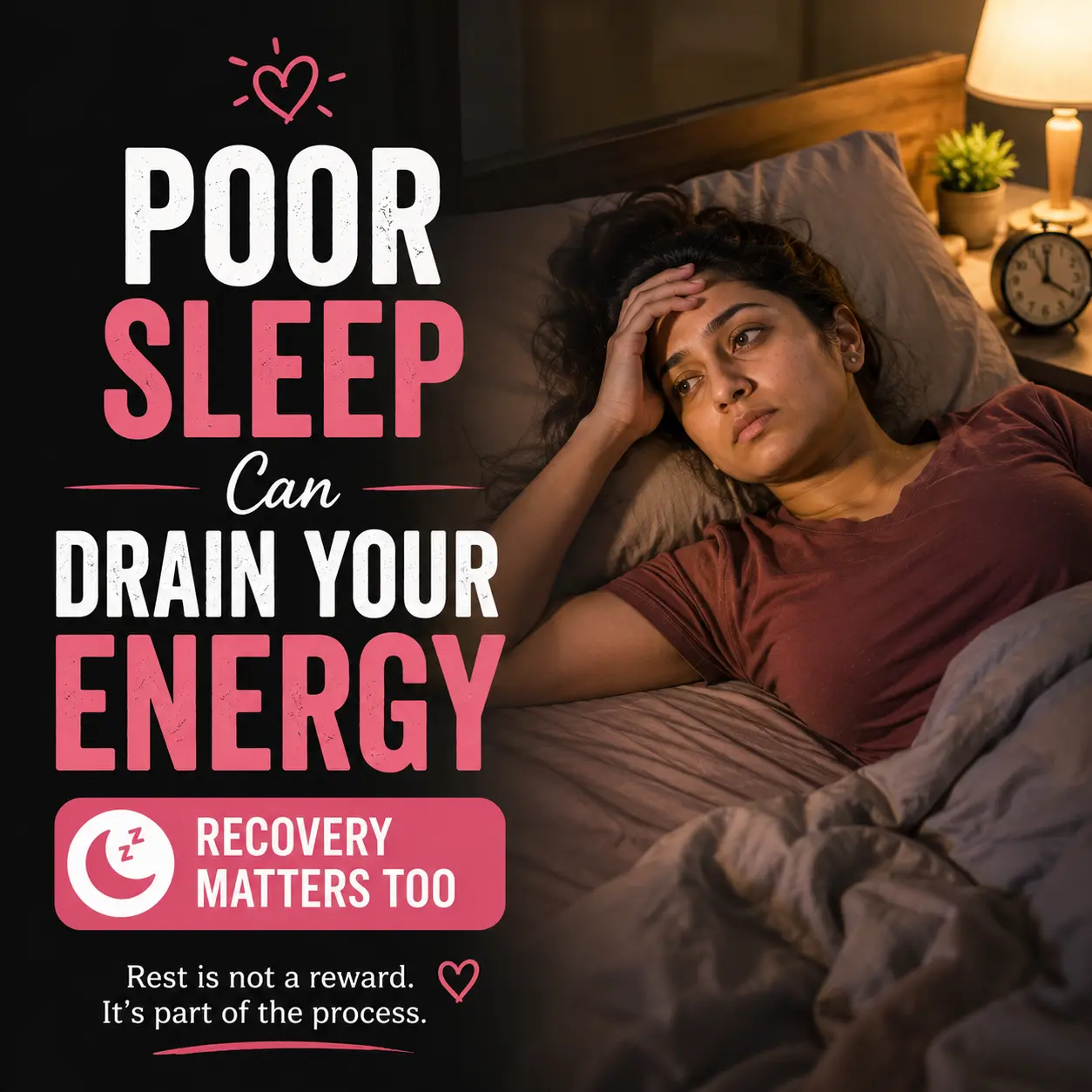
Many people focus only on:
- calories
- workouts
- diet plans
…but ignore sleep completely.
That’s a mistake.
Poor sleep can affect:
- recovery
- hunger hormones
- energy levels
- workout performance
- stress levels
Even healthy habits become difficult when your body is sleep-deprived.
According to the Sleep Foundation, inadequate sleep may negatively affect metabolism, appetite, and energy regulation.
Dehydration Can Cause Low Energy
This is surprisingly common during weight loss journeys.
When people start exercising more, they:
- sweat more
- lose fluids
- forget hydration
Even mild dehydration may cause:
- headaches
- weakness
- dizziness
- fatigue
And sometimes:
people think they need more food when they actually need water.
Simple Hydration Habits Help
Try:
- drinking water throughout the day
- keeping a bottle nearby
- hydrating after workouts
Small habits make a big difference.
Over-Exercising Can Lead to Burnout
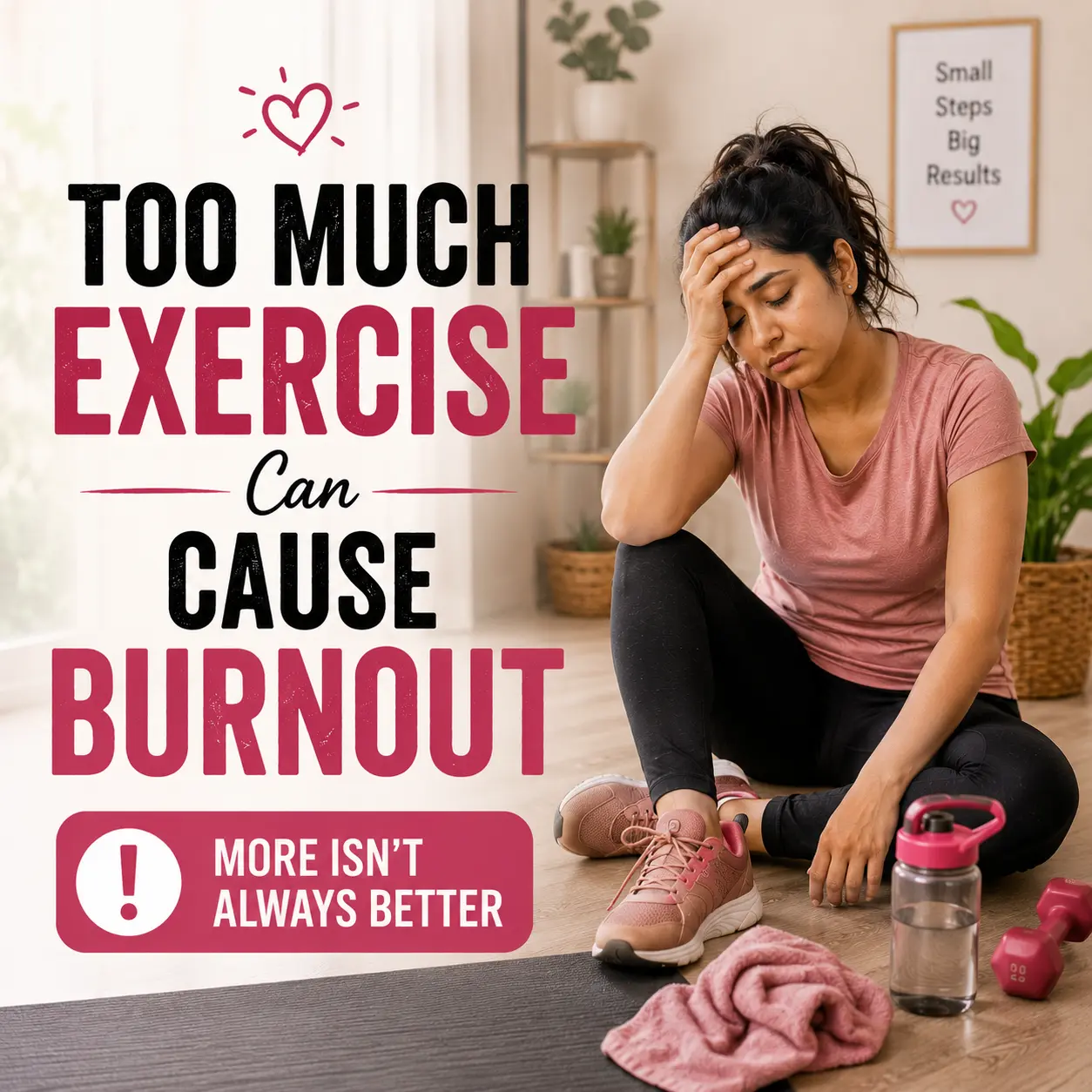
This is another major problem.
Many people become extremely motivated in the beginning.
So they suddenly start:
- intense cardio daily
- long workout sessions
- multiple workouts per day
At first, this feels productive.
But eventually:
- exhaustion builds
- motivation drops
- soreness increases
- consistency becomes difficult
More exercise is not always better.
👉 You may also enjoy:
Why Home Workouts Don’t Show Results Fast
Not Eating Enough Protein Can Increase Fatigue

Protein is important during weight loss because it supports:
- recovery
- muscle maintenance
- fullness
- energy stability
When meals lack protein, people often feel:
- weak
- hungry quickly
- low on energy
Simple protein-rich foods include:
- paneer
- eggs
- lentils
- tofu
- sprouts
- curd
Balanced meals usually support energy much better than restrictive eating.
👉 You can also explore:
Healthy Indian Diet Plan for Weight Loss (7 Days)
Women May Experience Fatigue Differently

Hormones can influence:
- energy
- cravings
- recovery
- mood
- water retention
Some women feel:
- more tired before periods
- lower motivation during hormonal fluctuations
- stronger cravings while dieting
This is normal.
Your body is not failing.
Hormonal changes can affect how your body responds to exercise and calorie deficits.
👉 Related article:
Why Belly Fat Is Harder to Lose for Women
How to Improve Energy During Weight Loss
Now let’s focus on practical solutions.
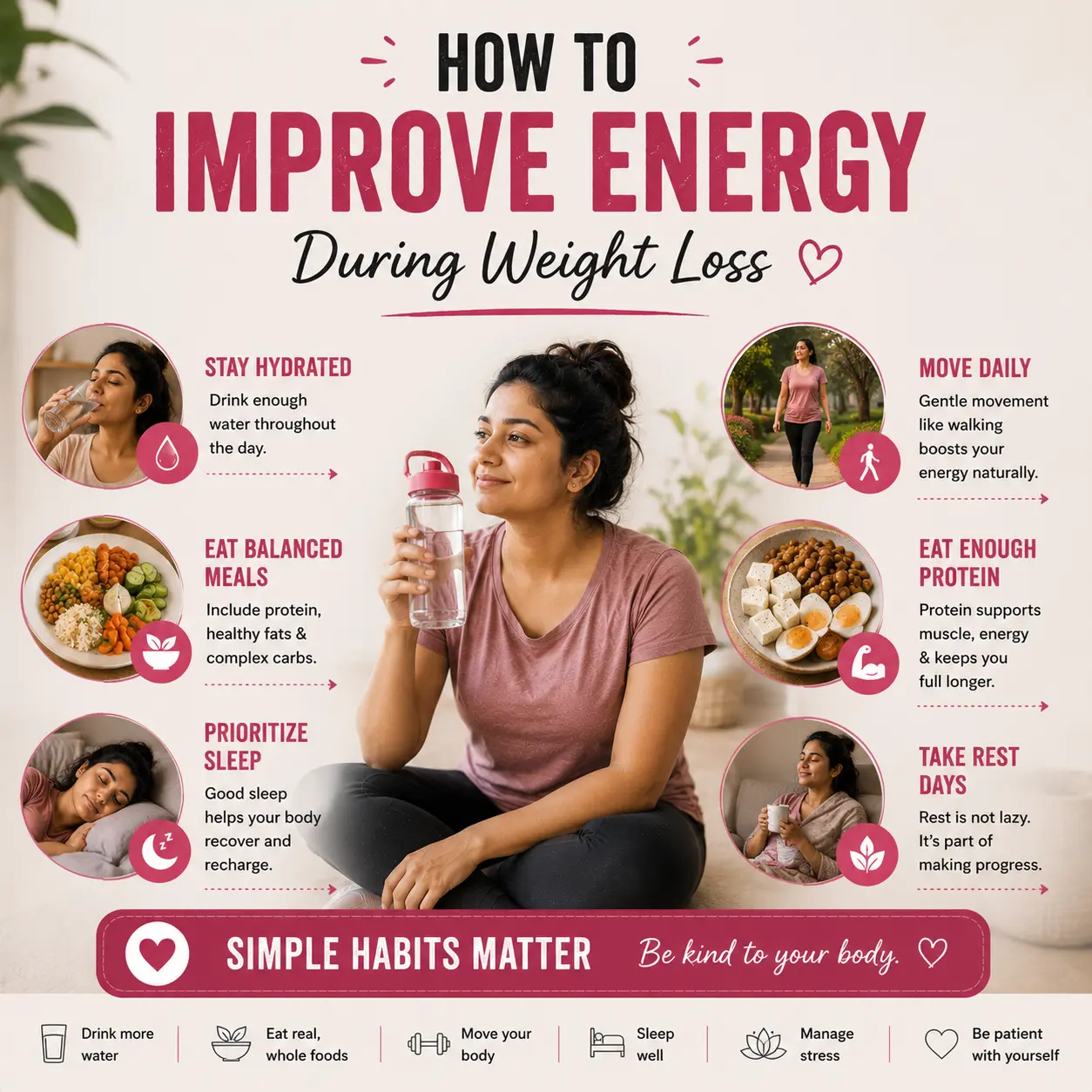
1. Eat Balanced Meals
Try including:
- protein
- fiber
- healthy fats
- complex carbs
Balanced meals help improve fullness and energy stability.
2. Stop Chasing Fast Results
Extreme calorie cuts usually create:
- fatigue
- cravings
- burnout
Slow progress is often healthier and easier to maintain.
👉 You may also like:
Fat Loss vs Weight Loss: Which One Should You Focus On?
3. Prioritize Sleep
Good sleep improves:
- recovery
- mood
- energy
- hunger control
Even 30–60 extra minutes of sleep can help significantly.
4. Choose Realistic Workouts
You do not need:
- extreme HIIT
- exhausting cardio
- painful workouts
Simple consistent movement works too.
👉 You may also enjoy:
Standing Exercises for Weight Loss at Home
5. Stay Hydrated
Hydration affects:
- energy
- recovery
- focus
- workout performance
Small hydration habits matter more than people realize.
6. Take Rest Days Seriously
Rest is not laziness.
Recovery helps:
- muscles repair
- energy improve
- consistency continue long-term
Burnout helps nobody.
Final Thoughts

Feeling tired during weight loss can feel discouraging.
However, it does not automatically mean your journey is failing.
In many cases, your body is simply adjusting to:
- new habits
- increased activity
- calorie changes
- recovery demands
The solution is not to quit.
Instead:
- eat balanced meals
- stay hydrated
- sleep properly
- avoid extreme dieting
- choose sustainable workouts
Because healthy weight loss should support your life — not completely drain your energy