
Confused About When to Exercise for Weight Loss?
You want to lose weight.
You’re ready to exercise.
But one question keeps popping up:
Should I work out in the morning or the evening?
Some people swear by early morning workouts. Others say evening exercise burns more fat. Social media only adds to the confusion.
The truth is simple:
👉 There is no one “perfect” time for everyone.
However, there is a best time for your body, routine, and consistency. Once you understand how morning and evening workouts affect weight loss differently, choosing becomes much easier.
Let’s break it down clearly.
How Exercise Timing Affects Weight Loss
Weight loss depends on three main things:
Calorie burn
Hormones
Consistency
The time you exercise can influence all three, but not in the dramatic way most people think.
Both morning and evening workouts can help with weight loss. The difference lies in how your body responds and how well you stick to it.
According to the Mayo Clinic Health System, the best time to exercise depends on individual lifestyle, energy levels, and long-term consistency rather than a fixed time of day.
Morning Workouts for Weight Loss: Pros and Cons
Morning exercise usually means working out on an empty or semi-empty stomach. This has specific effects.

Benefits of Morning Workouts
Can increase fat usage for energy
Helps build a routine and discipline
Boosts energy and mood for the day
Reduces chances of skipping workouts
Many people find that once the workout is done in the morning, excuses disappear.
Downsides of Morning Workouts
Body feels stiff initially
Strength and power may feel lower
Requires earlier wake-up time
Not ideal if sleep is poor
Morning workouts work best for people who enjoy structure and early routines.
Evening Workouts for Weight Loss: Pros and Cons
Evening workouts happen when your body is fully awake and fueled.

Benefits of Evening Workouts
Higher strength and endurance
Better performance during workouts
Muscles are warmer and more flexible
Stress relief after a long day
For many, evening exercise feels easier and more enjoyable.
Downsides of Evening Workouts
Higher chance of skipping due to work or fatigue
Late workouts may disturb sleep
Harder to stay consistent for some people
Evening workouts suit people who feel energetic later in the day.
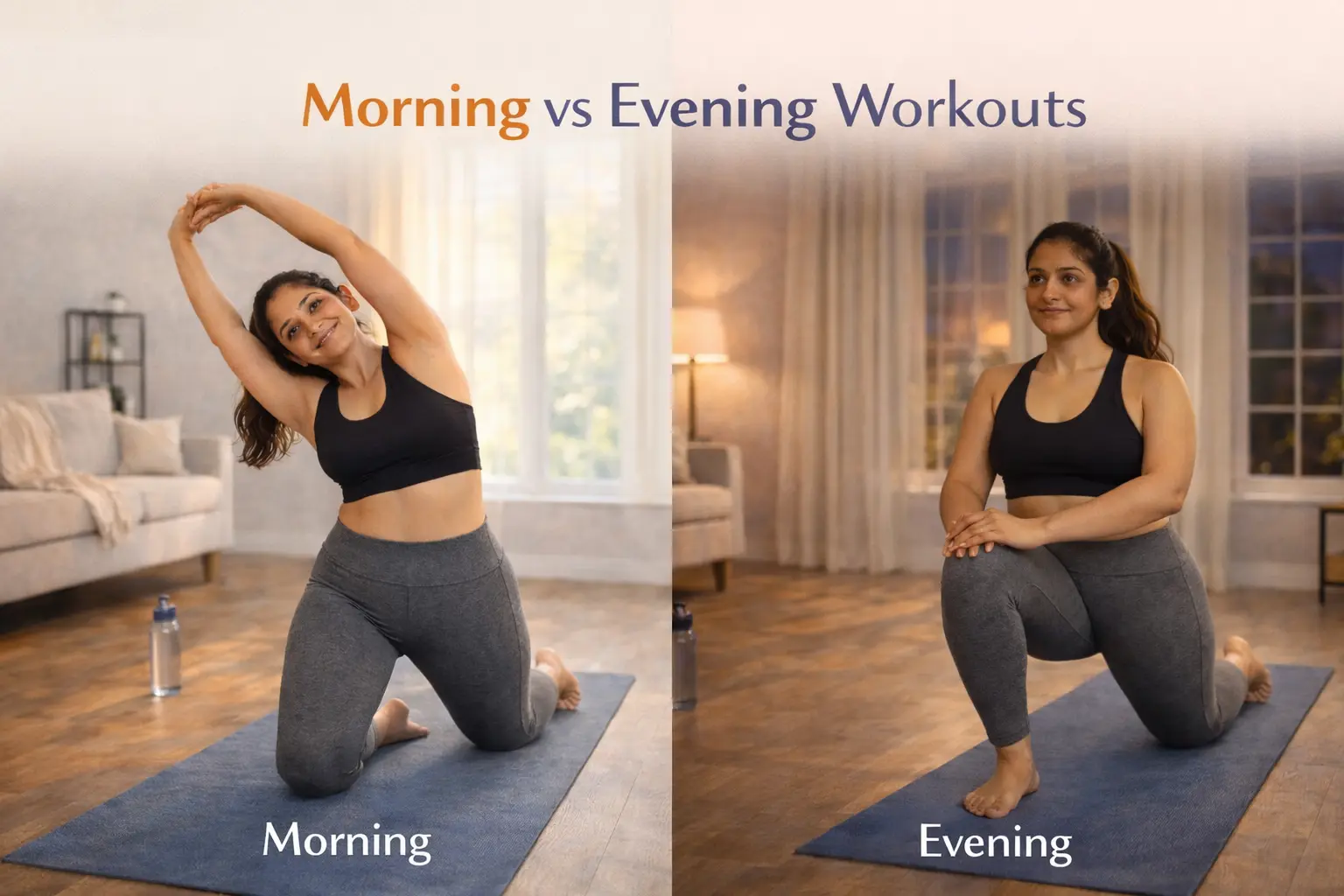
Morning vs Evening Exercise: Quick Comparison
| Factor | Morning Workout | Evening Workout |
|---|---|---|
| Fat usage | Slightly higher initially | Normal |
| Strength levels | Lower | Higher |
| Consistency | Easier to maintain | Can be inconsistent |
| Stress relief | Moderate | High |
| Sleep impact | Positive | May affect sleep if late |
This comparison shows that both timings have advantages.
What Actually Matters More Than Timing

Here’s the honest truth:
👉 The best time to exercise for weight loss is the time you can stick to consistently.
A perfect workout done once is useless.
A decent workout done regularly wins every time.
If morning workouts feel forced, they won’t last.
If evening workouts keep getting skipped, they won’t help either.
Consistency beats timing.
The Cleveland Clinic explains that regular exercise matters far more for health and weight management than whether you work out in the morning or evening.
Does Exercising on an Empty Stomach Burn More Fat?
This is a common question.
Morning workouts may use more fat during exercise, but total daily fat loss depends on:
Overall calorie balance
Diet quality
Workout intensity
Fat burned during exercise doesn’t always equal fat lost overall.
👉 Related read:
Fat Loss vs Weight Loss: Which One Should You Focus On?
Best Time to Exercise Based on Your Goal
Let’s make this practical.
If Your Goal Is Weight Loss
Choose the time you won’t skip
Combine exercise with a balanced diet
Focus on long-term consistency
If Your Goal Is Fat Loss & Toning
Evening workouts may feel stronger
Strength training performs better later in the day
If Your Goal Is Stress Reduction
Evening workouts help release tension
Yoga or walking at night works well
How Long Should Your Workout Be?
Timing matters less than duration and quality.
For most people:
20–45 minutes is enough
4–5 days per week works best
Short, regular workouts are better than long, irregular ones.
👉 Helpful guide:
How Long Does It Take to See Results from Home Workouts?
What About Home Workouts?

Home workouts follow the same rules.
Morning home workouts:
Save time
Reduce excuses
Evening home workouts:
Feel less rushed
Improve workout quality
Choose what fits your lifestyle.
Common Mistakes People Make
Switching workout times too often
Forcing morning workouts despite poor sleep
Exercising too late at night
Ignoring diet and recovery
Weight loss isn’t just about exercise timing. It’s about balance.
So, Morning or Evening: What’s Better?
Here’s the final answer:
👉 Both work. Neither is magical.
Morning workouts help with routine and discipline.
Evening workouts help with performance and stress relief.
The best time is the one that:
Fits your energy levels
Matches your schedule
Feels sustainable
That’s the time that leads to weight loss.
Frequently Asked Questions
It may burn slightly more fat during the workout, but total fat loss depends on daily habits.
Yes, intense workouts late at night may disturb sleep for some people.
Beginners should choose the time they enjoy most, not force mornings.
Occasional changes are fine, but frequent switching hurts consistency.
Yes, if you’re consistent and manage diet properly
Final Thoughts
Stop chasing the “perfect” workout time.
Start choosing the realistic one.
Weight loss doesn’t come from when you exercise.
It comes from how often you show up.
Pick a time you can commit to.
Stick with it.
Results will follow.
👉 You may also like: