
South Indian cuisine is celebrated for its delicious, nutritious, and well-balanced meals, making it a fantastic option for those looking to lose weight. With fiber-rich idlis and protein-packed dals, South Indian food provides an excellent blend of flavor and health benefits.

Why Opt for a South Indian Diet for Weight Loss?
If you’re on the lookout for a South Indian weight-loss diet plan, this guide will assist you in crafting a calorie-controlled, nutritious meal plan using wholesome, locally sourced ingredients. Additionally, South Indian meals are not only tasty but also naturally high in fiber and protein, making them perfect for effective weight management.
How a South Indian Diet Helps in Weight Loss

1. Nutrient-rich & Balanced Meals
A typical South Indian diet features a mix of complex carbohydrates, proteins, healthy fats, and fiber. This combination provides balanced nutrition, which is crucial for effective weight loss.
2. High Fiber Content
Traditional dishes such as idli, dosa, upma, and sambhar are made with fiber-rich ingredients like rice, lentils, and vegetables. As a result, these foods aid digestion and help you feel full longer, reducing the temptation to snack unnecessarily.
3. Low in Unhealthy Fats
In contrast to many other cuisines, South Indian recipes typically use less oil. They also include healthy fats from sources like coconut and mustard seeds, which are beneficial for heart health and weight management.
4. Natural Detox with Spices
Spices commonly used in Indian cooking, such as turmeric, curry leaves, cumin, and pepper, not only enhance flavor but also help boost metabolism and improve digestion. Therefore, they play an important role in naturally burning excess fat.
5. Protein-Packed Dishes
South Indian meals often feature lentils, dals, paneer, and lean meats, providing a high-protein diet that supports muscle growth and fat loss. Incorporating these foods into your daily meals can lead to more effective weight loss outcomes.
7-Day South Indian Diet Plan for Weight Loss
Day 1
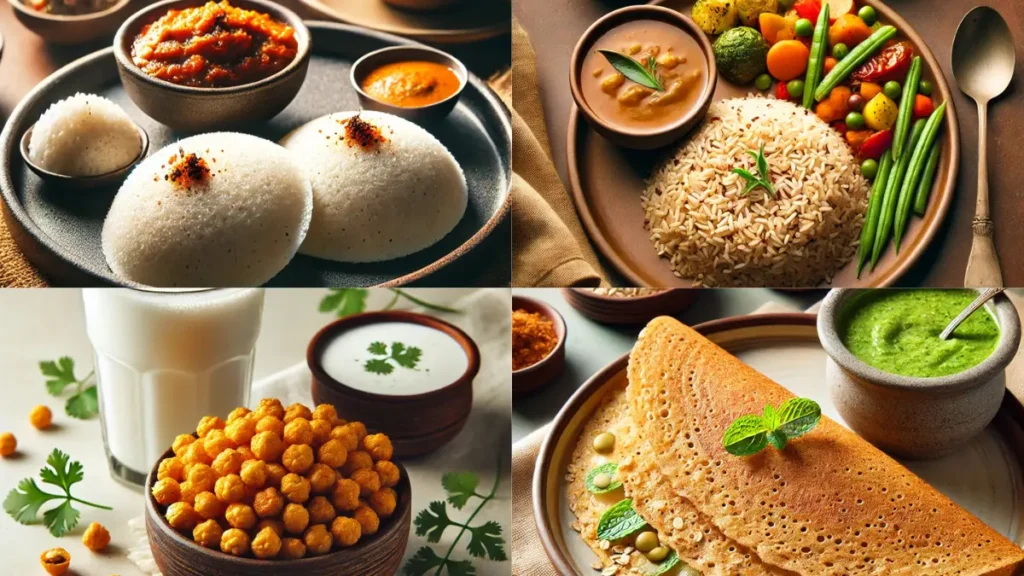
Breakfast: 2 idlis served with coconut chutney + herbal tea
Lunch: Brown rice accompanied by sambar and stir-fried vegetables
Evening Snack: Roasted chana or a glass of buttermilk
Dinner: Oats dosa paired with mint chutney
Day 2
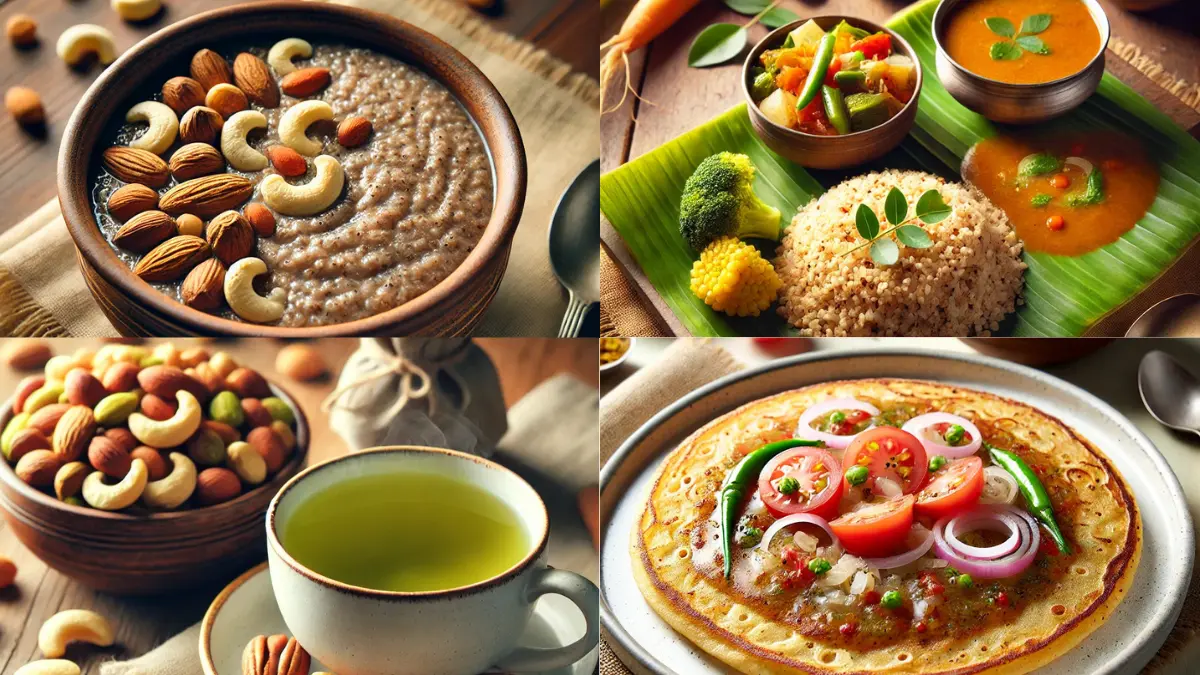
Breakfast: Ragi porridge topped with nuts
Lunch: Millet rice with rasam and steamed vegetables
Evening Snack: Green tea along with a handful of nuts
Dinner: Vegetable uttapam served with coconut chutney
Day 3
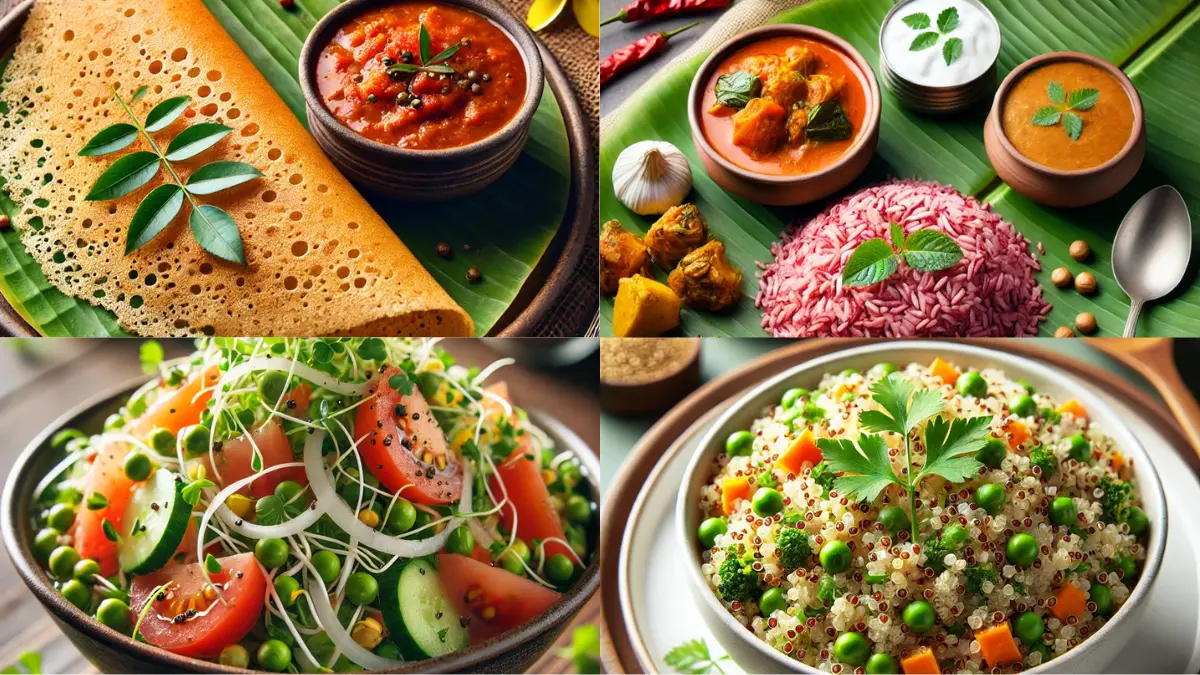
Breakfast: Moong dal dosa with tomato chutney
Lunch: Red rice with vegetable curry and curd
Evening Snack: A refreshing sprouts salad
Dinner: Quinoa upma
Day 4
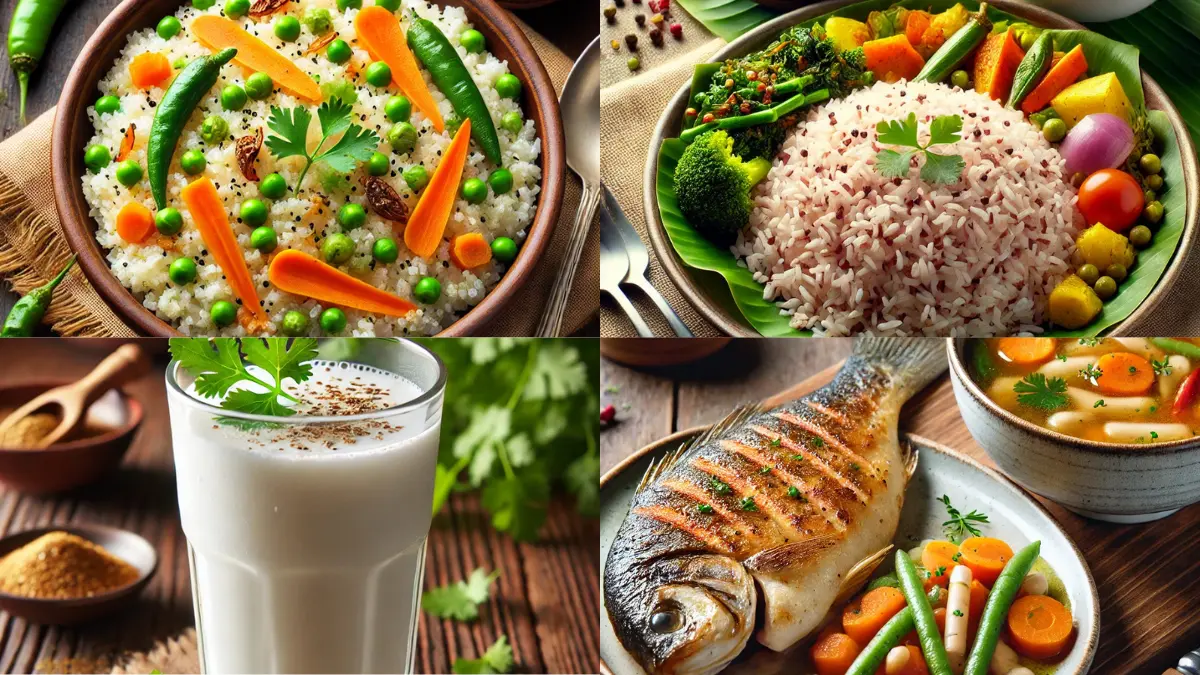
Breakfast: Rava upma mixed with veggies
Lunch: Brown rice with dal and a vegetable stir-fry
Evening Snack: A glass of buttermilk
Dinner: Grilled fish served with vegetable soup
Day 5
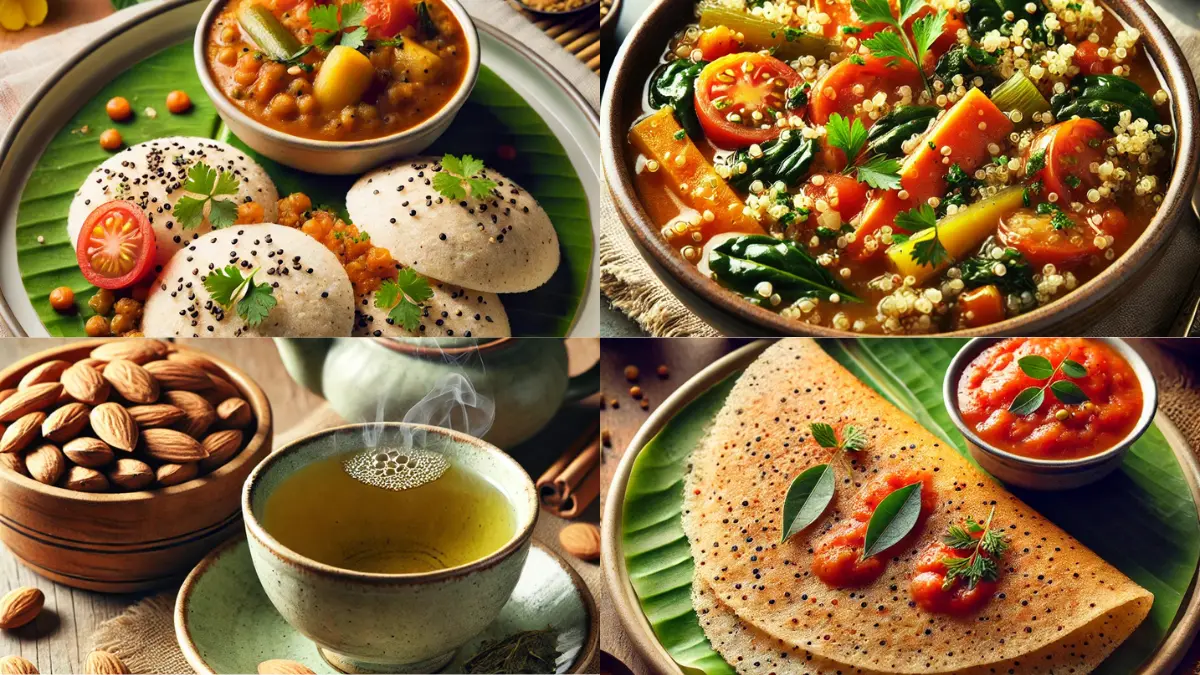
Breakfast: Oats idli with sambar
Lunch: Quinoa accompanied by vegetable stew
Evening Snack: Green tea with almonds
Dinner: Mixed millet dosa served with tomato chutney
Day 6
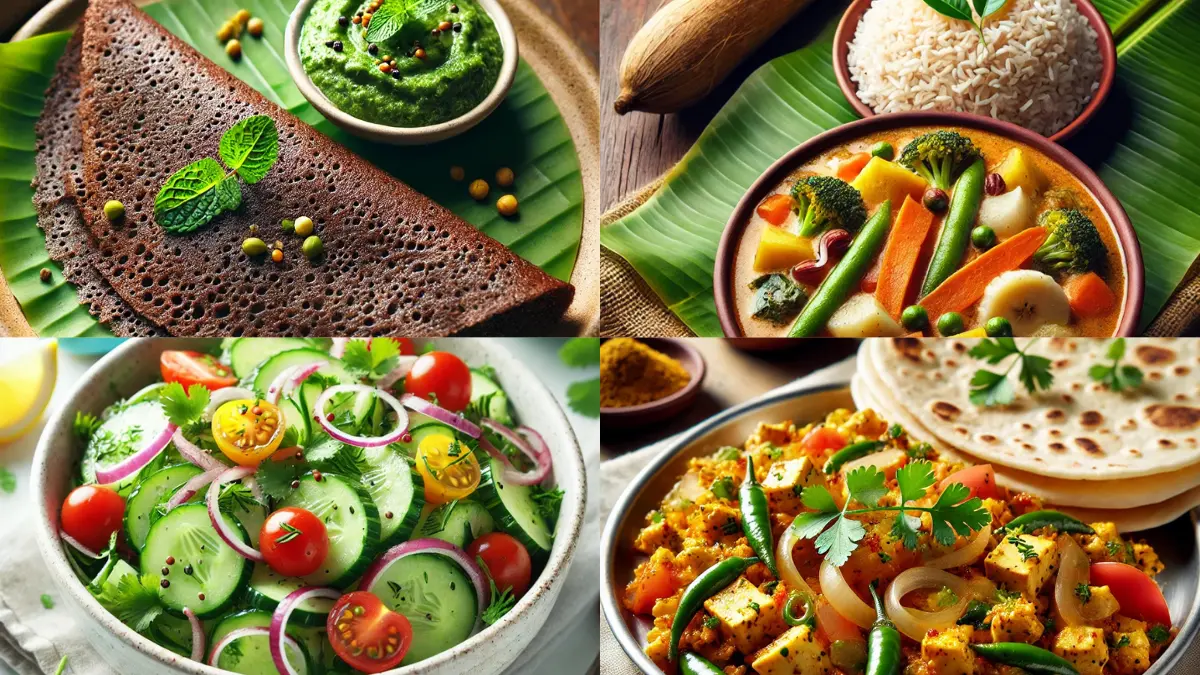
Breakfast: Ragi dosa with mint chutney
Lunch: Kerala-style avial with brown rice
Evening Snack: Cucumber salad
Dinner: Paneer bhurji served with roti
Day 7
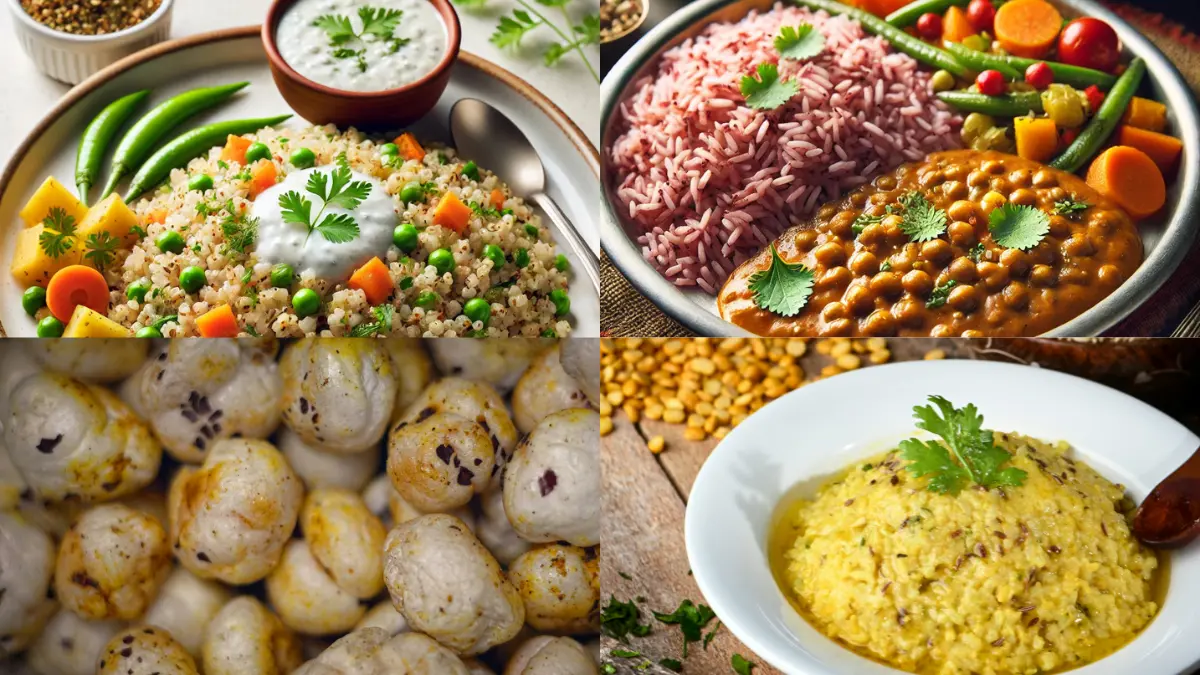
Breakfast: Broken wheat upma with coconut chutney
Lunch: Red rice with dal and mixed veggies
Evening Snack: Makhana (fox nuts)
Dinner: Moong dal khichdi
Best South Indian Foods for Weight Loss
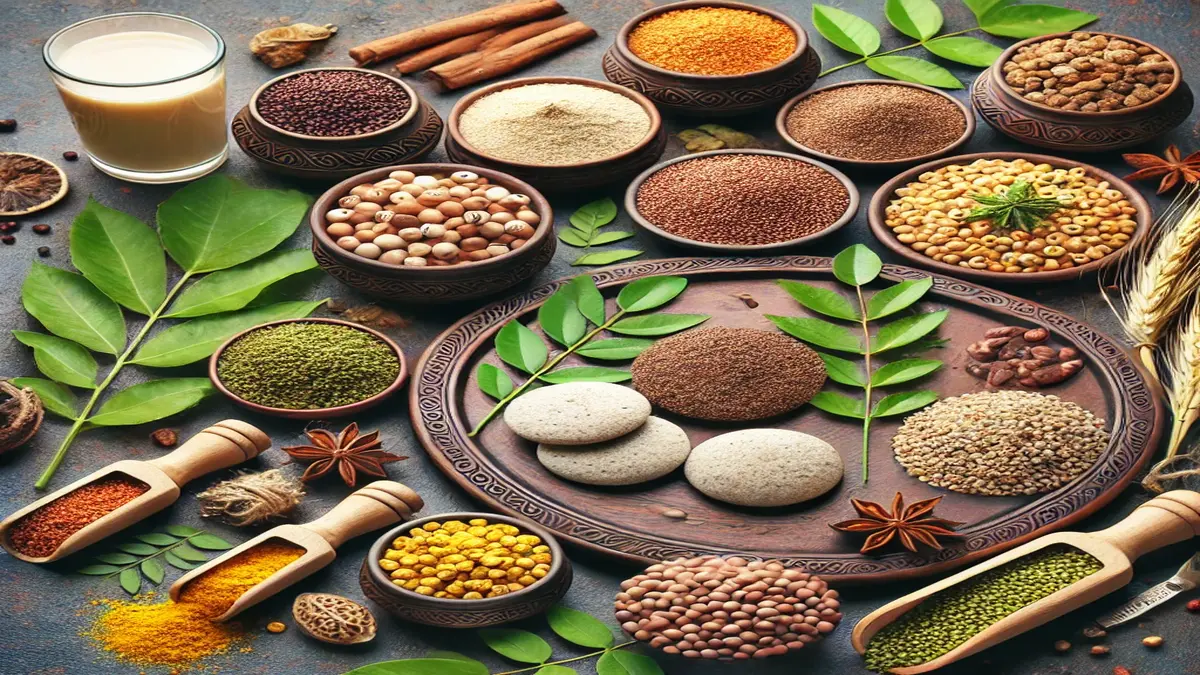
Ragi (Finger Millet)
Ragi is packed with calcium, fiber, and protein, which is beneficial for weight loss and aids digestion. It’s also a fantastic substitute for refined grains.
Millets (Foxtail, Bajra, Jowar)
These grains are low in calories and high in fiber, making them excellent alternatives to white rice. They help you feel full longer, which can curb hunger.
Curry Leaves
Known for their fat-burning properties, curry leaves can enhance metabolism and help detoxify the body. Regular consumption may support weight loss efforts.
Turmeric & Spices
Turmeric and various South Indian spices are known to reduce inflammation, enhance digestion, and boost metabolism, all of which contribute to weight loss.
Lentils & Dals
Rich in protein and fiber, dals help keep you satiated and are essential for weight loss. They are a common part of South Indian cuisine.
Fermented Foods (Idli, Dosa, Buttermilk)
These foods promote gut health and improve digestion, which is important for weight management. Including them in your diet is a smart choice.