
Looking for a yoga practice that’s deeply healing, gentle, and rooted in mind-body awareness? Somatic Yoga might be exactly what you need. Unlike traditional yoga styles focused on form or fitness, somatic yoga taps into your nervous system — helping release deep tension, trauma, and stress.
In this guide, we’ll explore what somatic yoga is, how it works, the science behind it, who it’s for, and how to start.
If you want learn more about gentle yoga for beginners please visit yoga for beginners blog
What Is Somatic Yoga?
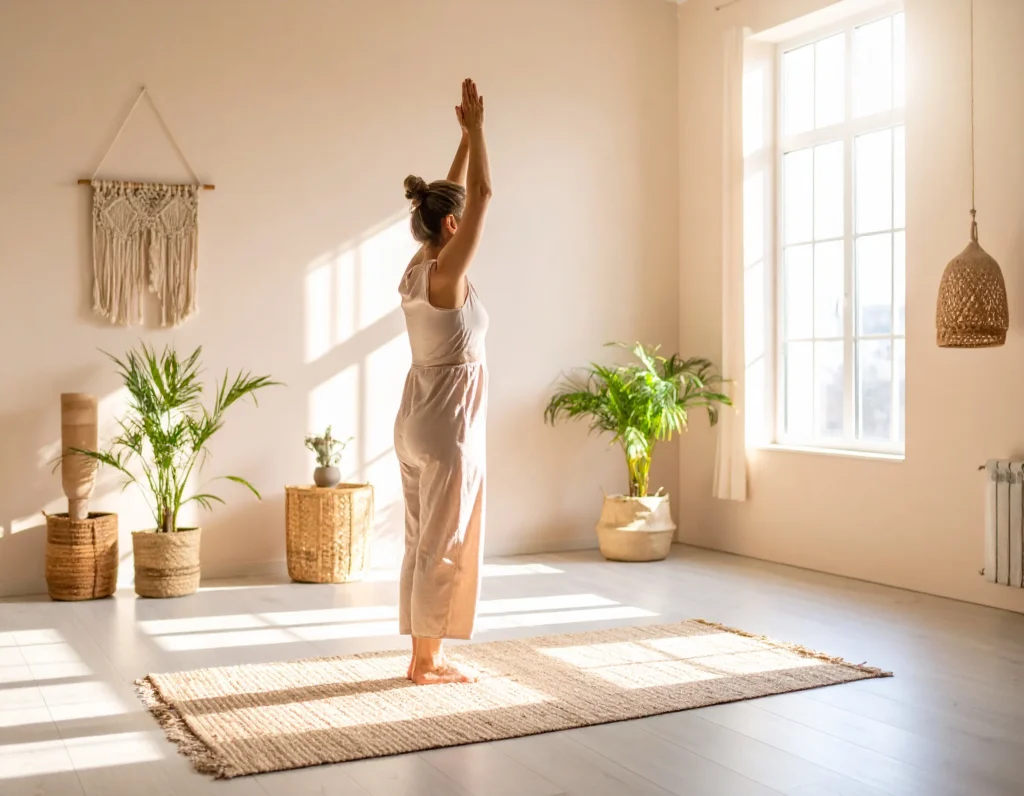
Somatic yoga combines gentle yoga postures with somatic (body-based) movement therapy. The word “somatic” comes from the Greek word soma, meaning “the living body as experienced from within.”
Instead of pushing into a pose, you slow down and notice your internal sensations, making small, mindful movements that help rewire how your brain and body communicate.
The Science Behind Somatic Yoga
Somatic yoga works by calming your autonomic nervous system, especially the sympathetic (fight-or-flight) response. It engages the parasympathetic nervous system — the one responsible for rest, digestion, and healing.
This technique is often based on the principles of:
Hanna Somatics
Feldenkrais Method
Trauma-Sensitive Yoga
When practiced regularly, it can help retrain muscle memory, release chronic patterns of tension, and improve emotional regulation.
Benefits of Somatic Yoga
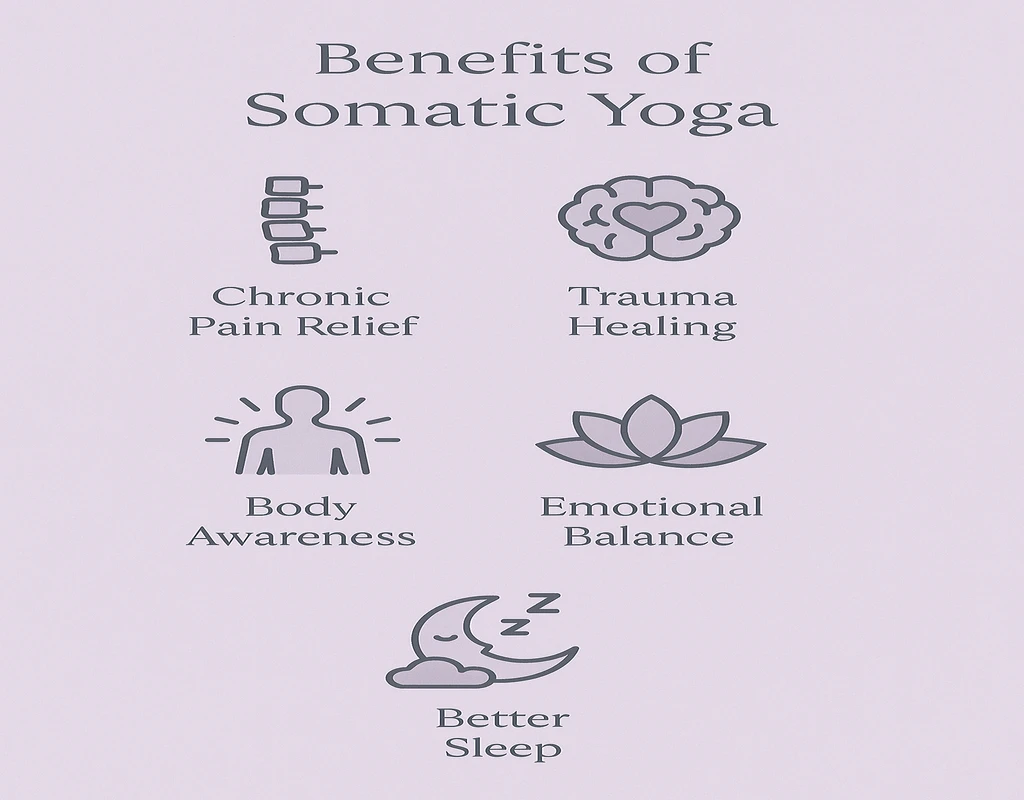
Here are some of the most powerful benefits of somatic yoga:
1. Reduces Chronic Pain
People with neck, shoulder, or lower back pain often find long-term relief.
2. Heals Trauma and PTSD
Gentle, controlled movement can reset the nervous system, helping release stored trauma.
3. Improves Body Awareness
You learn to notice subtle sensations and correct misalignments without force.
4. Supports Emotional Balance
Somatic movement connects breath, emotion, and posture — leading to greater inner calm.
5. Enhances Sleep Quality
Regular practice can reduce insomnia by helping your body return to a rest-and-digest state.
Who Should Try Somatic Yoga?
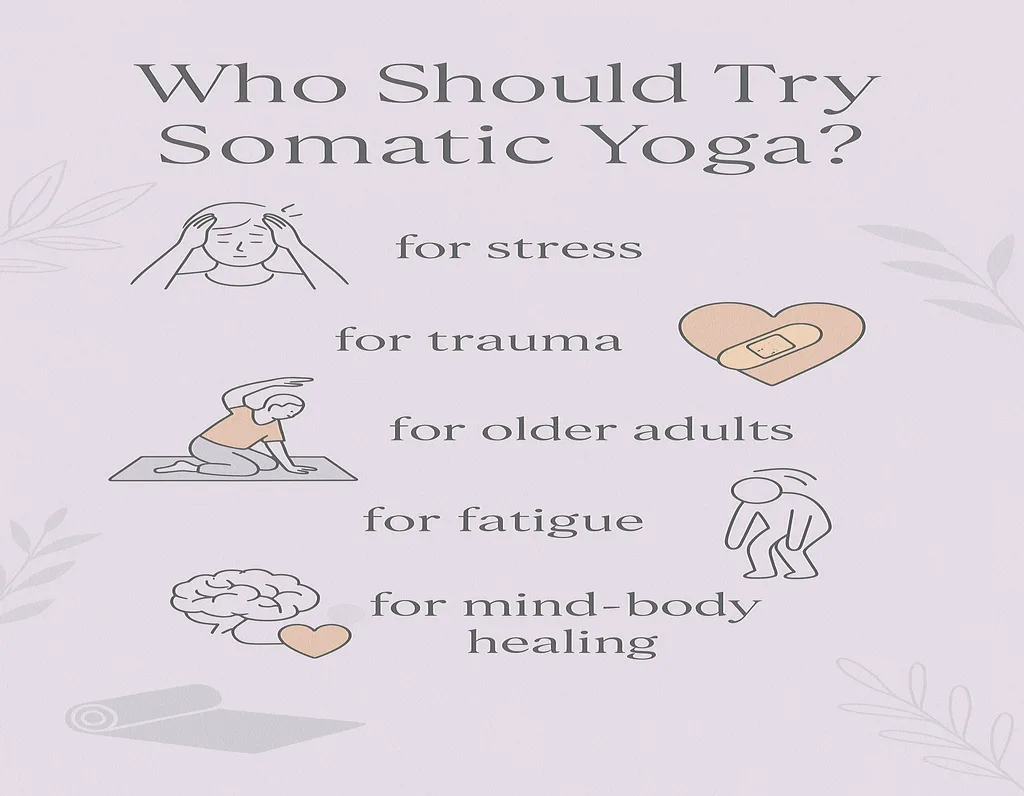
People with chronic stress or anxiety
Anyone healing from injury or trauma
Seniors or beginners needing gentle movement
Those with autoimmune issues or chronic fatigue
Individuals seeking deeper mind-body connection
📝 Real-life example: A friend of mine recovering from burnout started somatic yoga and noticed improved sleep, lower anxiety, and a better connection to her body — all within weeks.