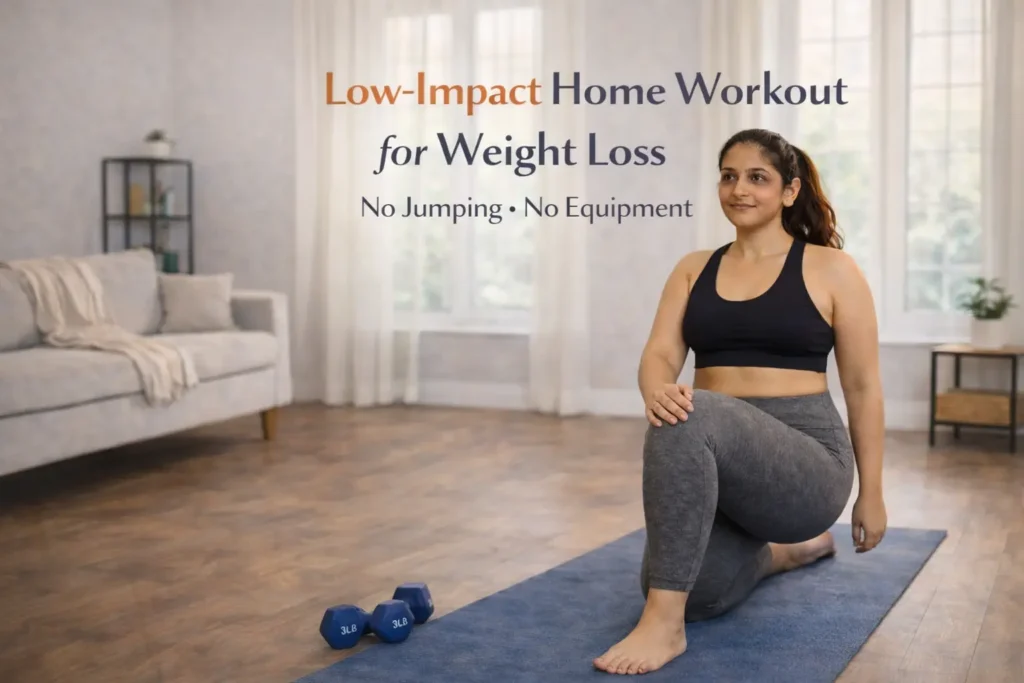
Want to Lose Weight but Can’t Do High-Impact Workouts?
You want to work out.
You want to lose weight.
But jumping hurts your knees. Cardio feels exhausting. And gym workouts just aren’t an option right now.
This is a common problem—especially for beginners, women with joint pain, PCOD, or anyone returning to fitness after a break.
Here’s the good news:
👉 You don’t need jumping or equipment to lose weight.
Low-impact workouts can burn fat, improve strength, and support weight loss—without stressing your joints.
Let’s break it down properly.
What Is a Low-Impact Workout?
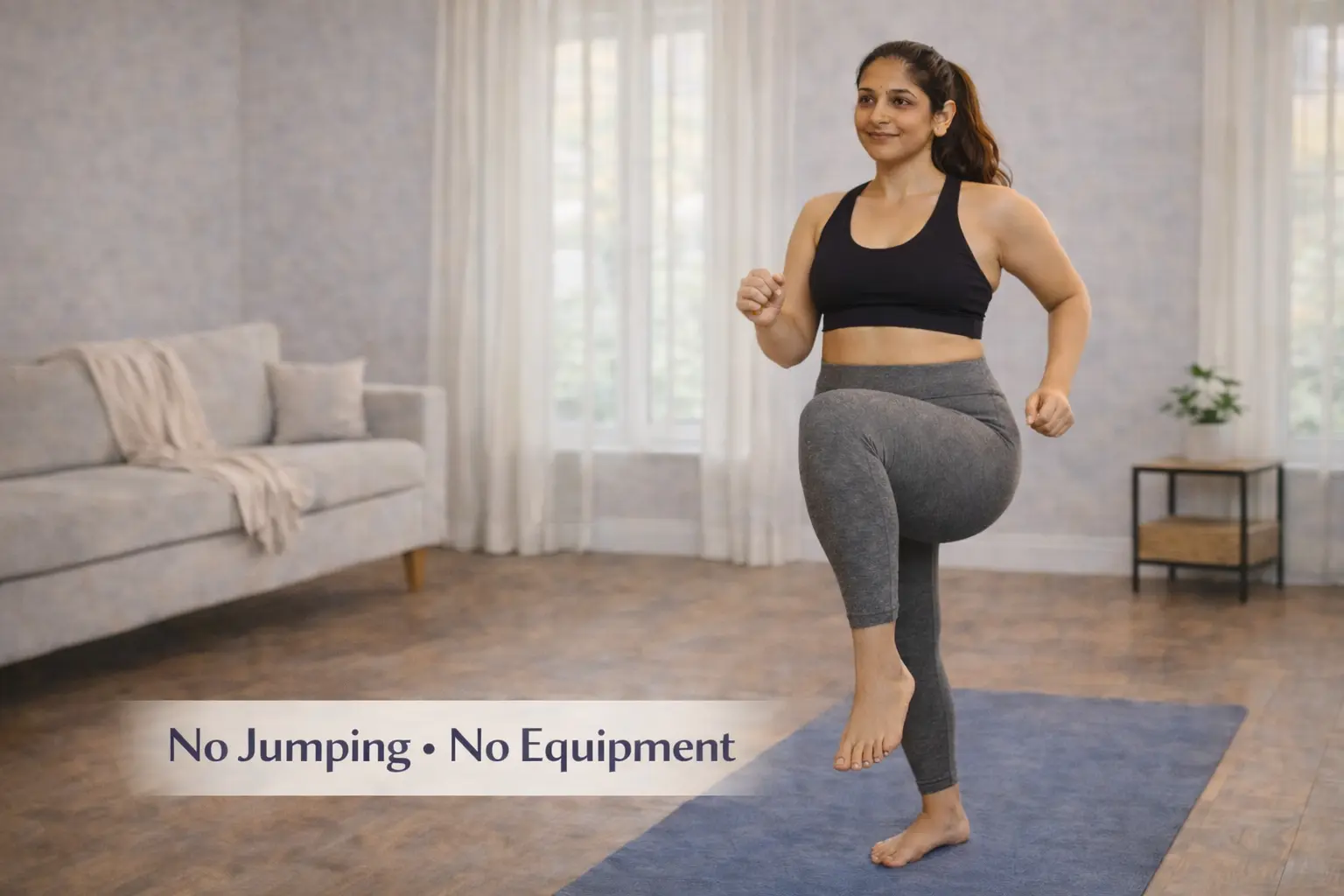
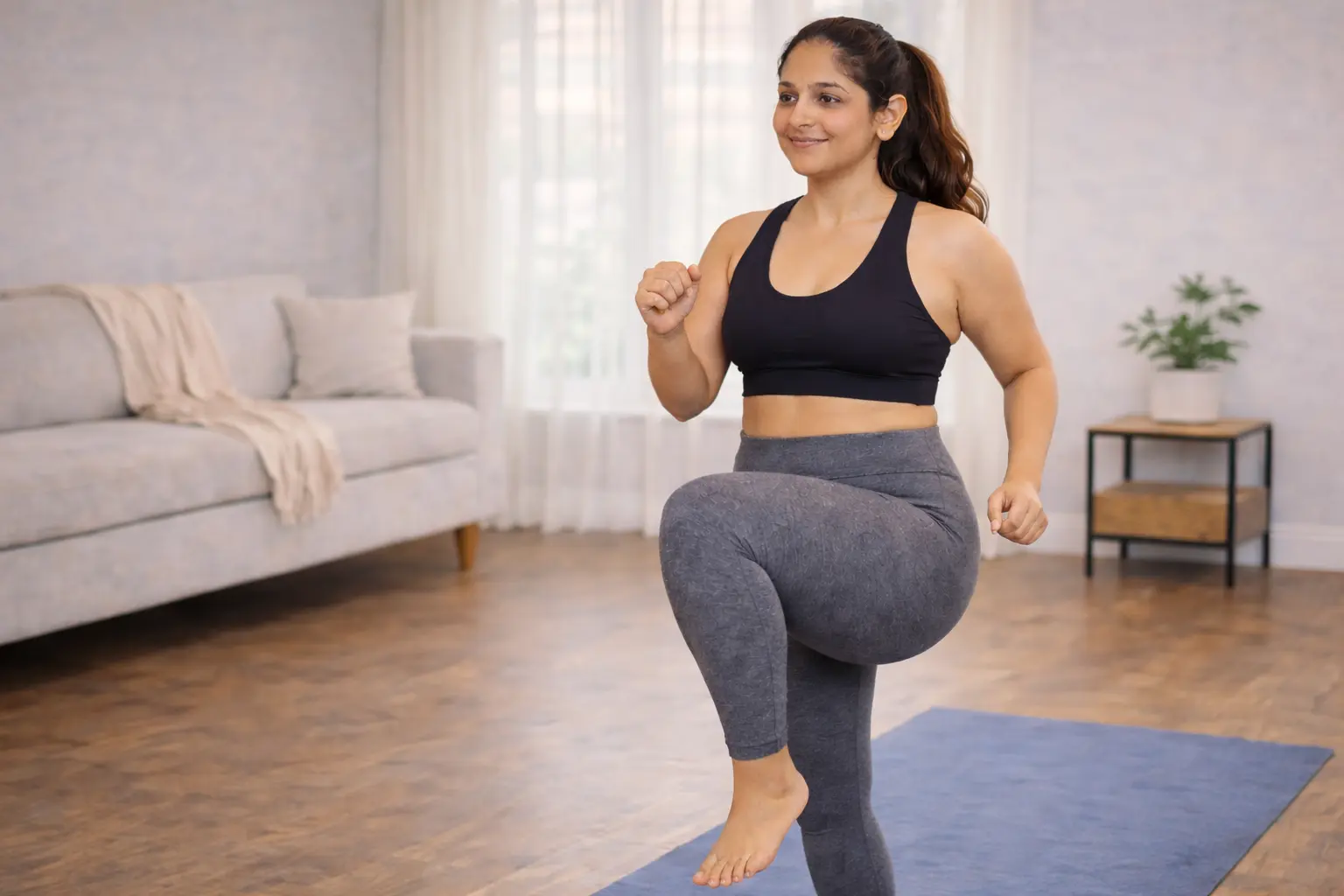
A low-impact workout keeps at least one foot on the ground at all times.
It reduces stress on:
Knees
Ankles
Lower back
At the same time, it keeps your muscles active and heart rate elevated.
Low-impact does not mean low results.
According to the Mayo Clinic, low-impact exercises reduce stress on joints while still supporting overall fitness and weight management.
Can You Really Lose Weight with Low-Impact Exercise?
Yes—if you do it correctly and consistently.
Weight loss depends on:
Calorie burn
Muscle engagement
Daily movement habits
Low-impact workouts support all three when done with focus and regularity.
👉 Related read: Fat Loss vs Weight Loss: Which One Should You Focus On?
Who Should Choose Low-Impact Home Workouts?
Low-impact workouts are ideal if you:
Are a beginner
Have knee or joint pain
Are overweight or obese
Have PCOD or hormonal issues
Feel uncomfortable with jumping exercises
They’re also great if you want something sustainable, not extreme.
Benefits of Low-Impact Home Workouts
Low-impact workouts offer several advantages:
Gentle on joints
Easy to maintain consistency
Lower injury risk
Suitable for all fitness levels
Can be done daily
Most importantly, they help you stay active without burnout.
The Cleveland Clinic highlights that low-impact workouts are especially helpful for beginners, people with joint pain, and those returning to exercise.
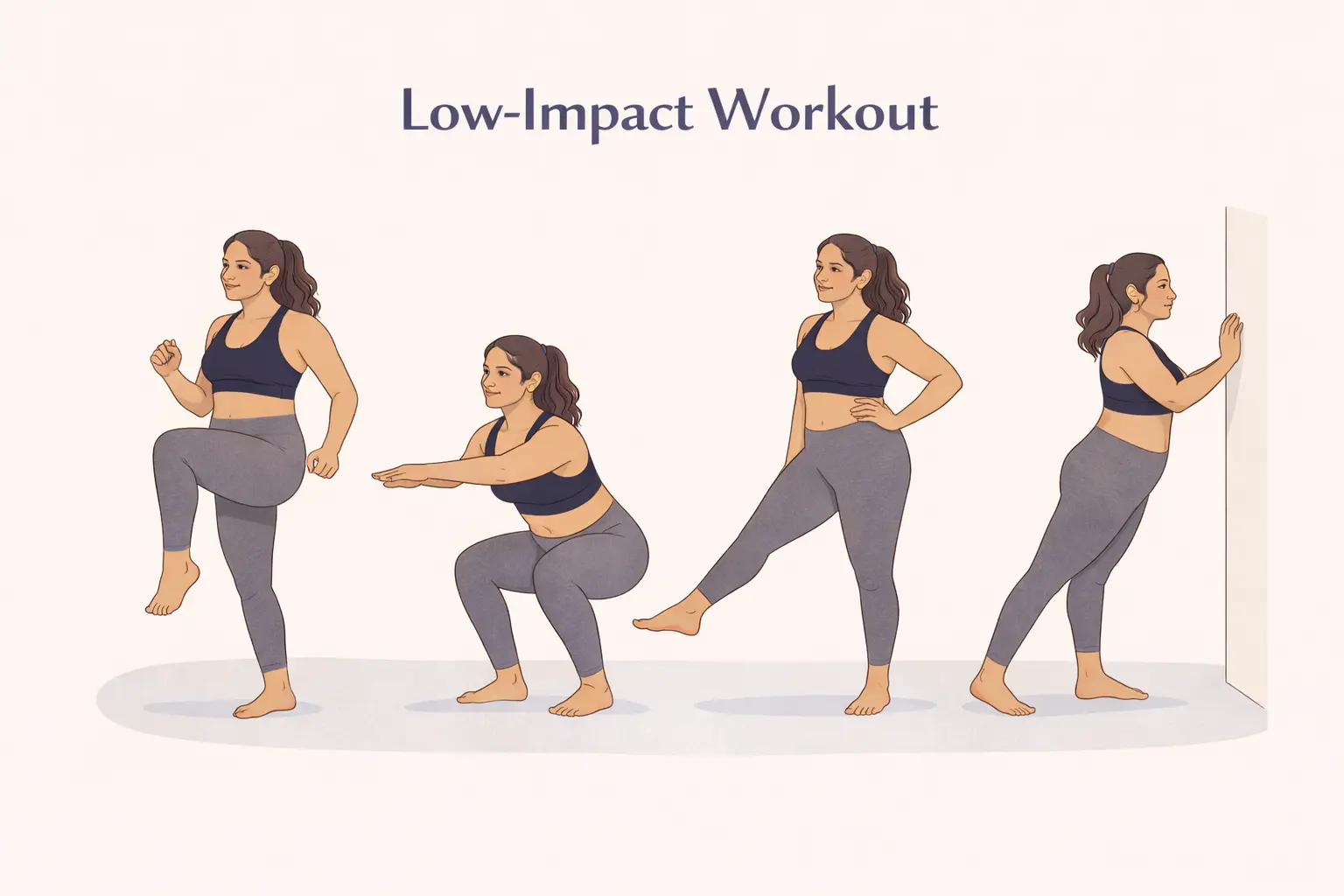
Low-Impact Home Workout Routine (No Jumping, No Equipment)
This routine takes 20–30 minutes and can be done at home.
Warm-Up (5 minutes)
Neck rolls
Shoulder rolls
Marching in place
Arm swings
Warming up reduces stiffness and prepares your body.
Main Workout (15–20 minutes)

| Exercise | Duration |
|---|---|
| Marching in place | 2 minutes |
| Standing knee lifts | 1 minute |
| Side leg raises | 1 minute per side |
| Squats (slow, controlled) | 15 reps |
| Standing twists | 1 minute |
| Wall push-ups | 12–15 reps |
| Glute bridges (on mat) | 15 reps |
Move slowly. Focus on form. Rest for 30 seconds if needed.
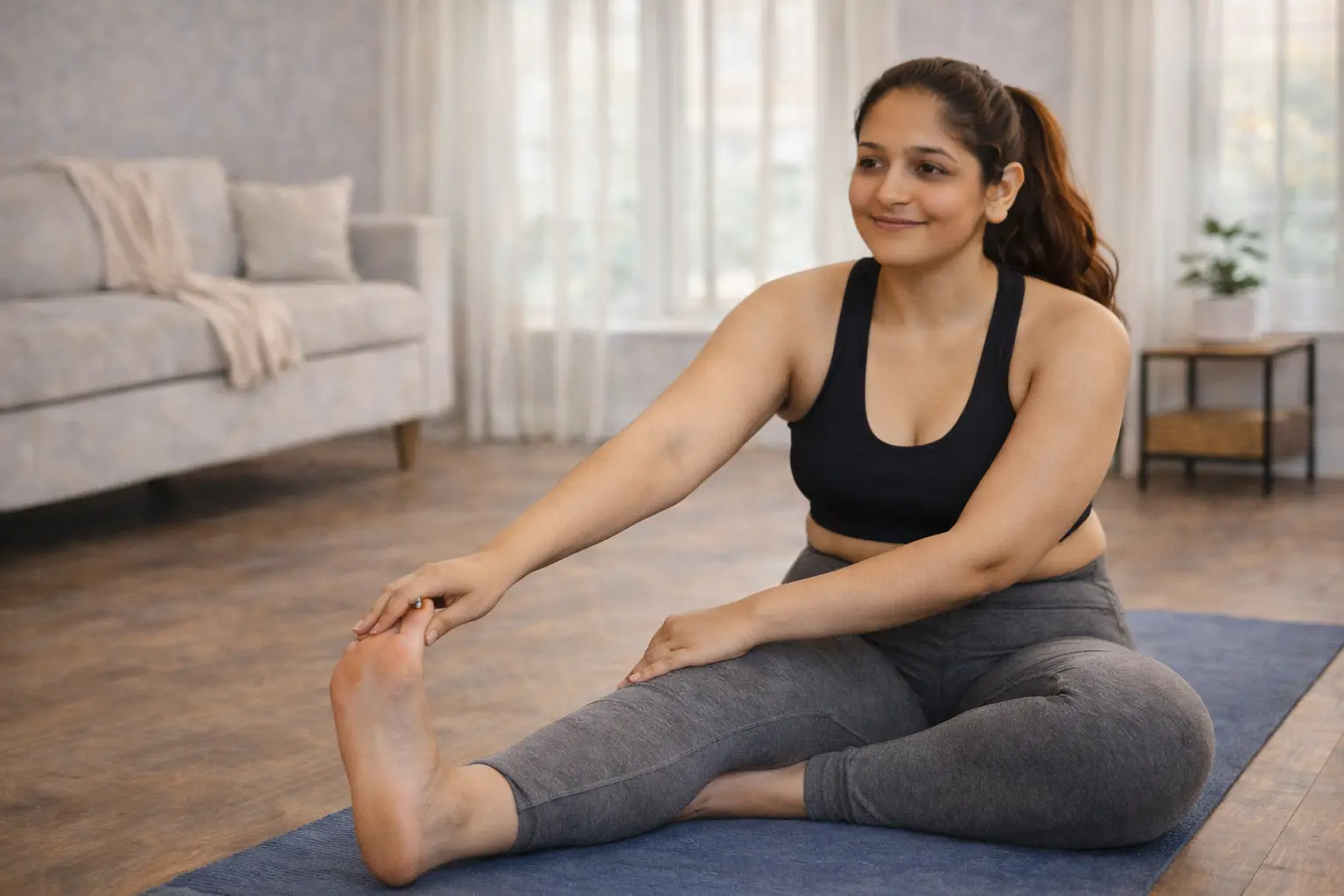
Cool-Down (5 minutes)
Forward bend
Seated stretch
Deep breathing
Cooling down improves recovery and flexibility.
How Often Should You Do This Workout?
For best results:
5–6 days per week
At least 20 minutes per session
Consistency matters more than intensity.
👉 You may also like: How Long Does It Take to See Results from Home Workouts?
Will This Workout Burn Fat?
Yes—but fat loss takes time.
Low-impact workouts:
Burn calories steadily
Build muscle gradually
Improve insulin sensitivity
Fat loss happens when this is paired with sensible eating.
Common Mistakes to Avoid
Many people fail not because the workout doesn’t work, but because of small mistakes.
Avoid these:
Rushing through exercises
Skipping warm-up or cool-down
Expecting fast results
Doing workouts inconsistently
Slow progress is still progress.
Morning or Evening: When Should You Do Low-Impact Workouts?
Either works.
Morning workouts:
Boost energy
Build routine
Evening workouts:
Reduce stress
Feel easier on joints
Choose what fits your lifestyle.
👉 Related read: Best Time to Exercise for Weight Loss: Morning or Evening?
How Long Before You See Results?
Here’s a realistic timeline:
1–2 weeks: Better energy and mood
3–4 weeks: Reduced bloating, clothes feel looser
6–8 weeks: Visible fat loss
Stick with it. Your body needs time.
Can You Do This Workout Every Day?
Yes.
Since there’s no jumping or heavy load, this routine is safe for daily movement.
Just listen to your body and take rest when needed.
Frequently Asked Questions
Yes. When done consistently, it supports fat loss and overall fitness.
Absolutely. It’s beginner-friendly and easy to modify.
No. Bodyweight exercises are enough to start.
20–30 minutes is sufficient for most people.
Yes, because there’s no jumping or high-impact movement.
Final Thoughts
Weight loss doesn’t require pain, jumping, or exhaustion.
Low-impact home workouts are:
Gentle
Effective
Sustainable
If you stay consistent and patient, results will follow.
Start where you are.
Move at your pace.
Keep going.
👉 You may also like: