
What Is Face Yoga?
Face yoga is becoming increasingly popular among women looking for a natural way to lift their face and slow down visible aging.
However, many women still wonder whether face yoga truly works or if it is just another beauty trend circulating on social media.
In this guide, you’ll learn how face yoga works, what science says about it, which benefits are realistic, and how Indian women can safely include it in their daily routine for glowing, youthful skin—without injections or expensive treatments.
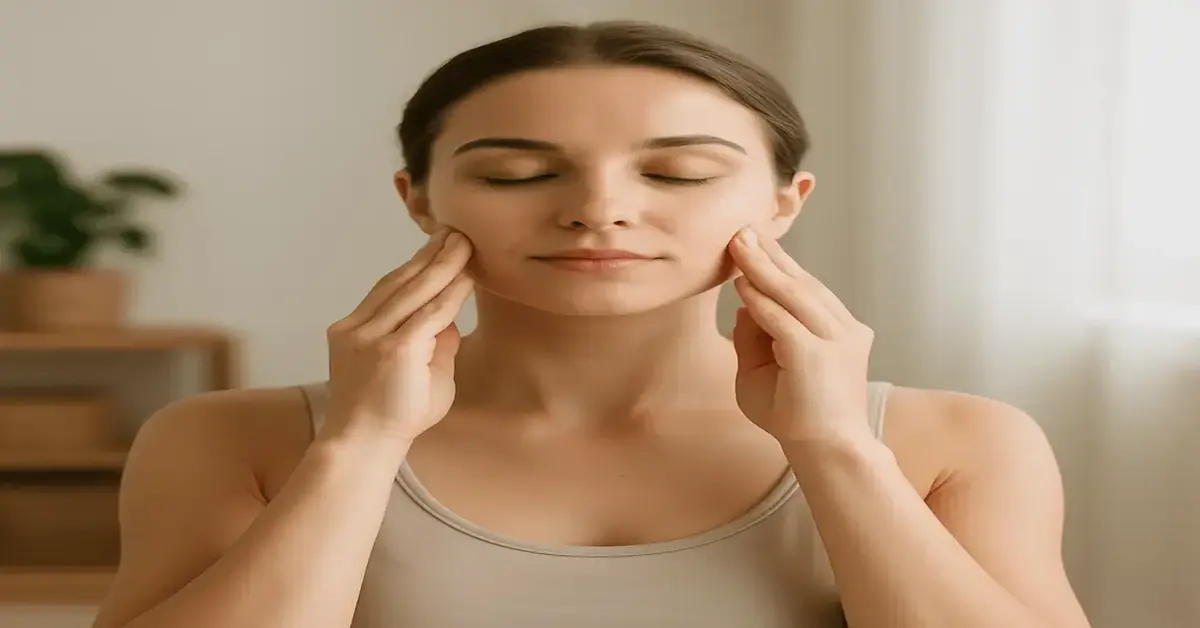
🌟 Benefits of Face Yoga

If you’ve been curious about the buzz surrounding face yoga, let’s dive into some fantastic benefits that experts and everyday practitioners swear by:
1. Natural Facelift
Moreover, face yoga works wonders by tightening and toning the muscles beneath your skin.
As a result, it gives a natural lift to areas that may be sagging, like your cheeks, jawline, and eyelids—no need for botox or fillers!
2. Improved Blood
Circulation By actively engaging facial muscles, face yoga enhances oxygen flow to your skin cells.
Consequently, this leads to a healthier and more radiant glow, leaving you with a radiant, glowing complexion.
3. Reduced Wrinkles and Fine Lines
These facial exercises can help smooth out forehead lines, laugh lines, and crow’s feet by both strengthening and relaxing the muscles underneath.
4. Stress Relief
Many face yoga routines incorporate deep breathing, which helps lower stress and cortisol levels—beneficial for both your skin and overall well-being.
5. Better Facial
Symmetry With regular practice, you can correct muscle imbalances, resulting in a more balanced and defined look.
How Does Face Yoga Work?

Our faces are home to over 40 muscles.
However, many of them do not get enough movement and can weaken over time. As a result, this can lead to sagging skin and visible wrinkles. So, how does face yoga help?
It works by:
– Activating those underused muscles
– Relaxing the overworked ones (like those pesky frown lines between your brows)
– Enhancing lymphatic drainage
– Boosting collagen production With regular practice, you can retrain your facial muscles, much like how you would with a workout at the gym.
🧖♀️ Popular Face Yoga Exercises
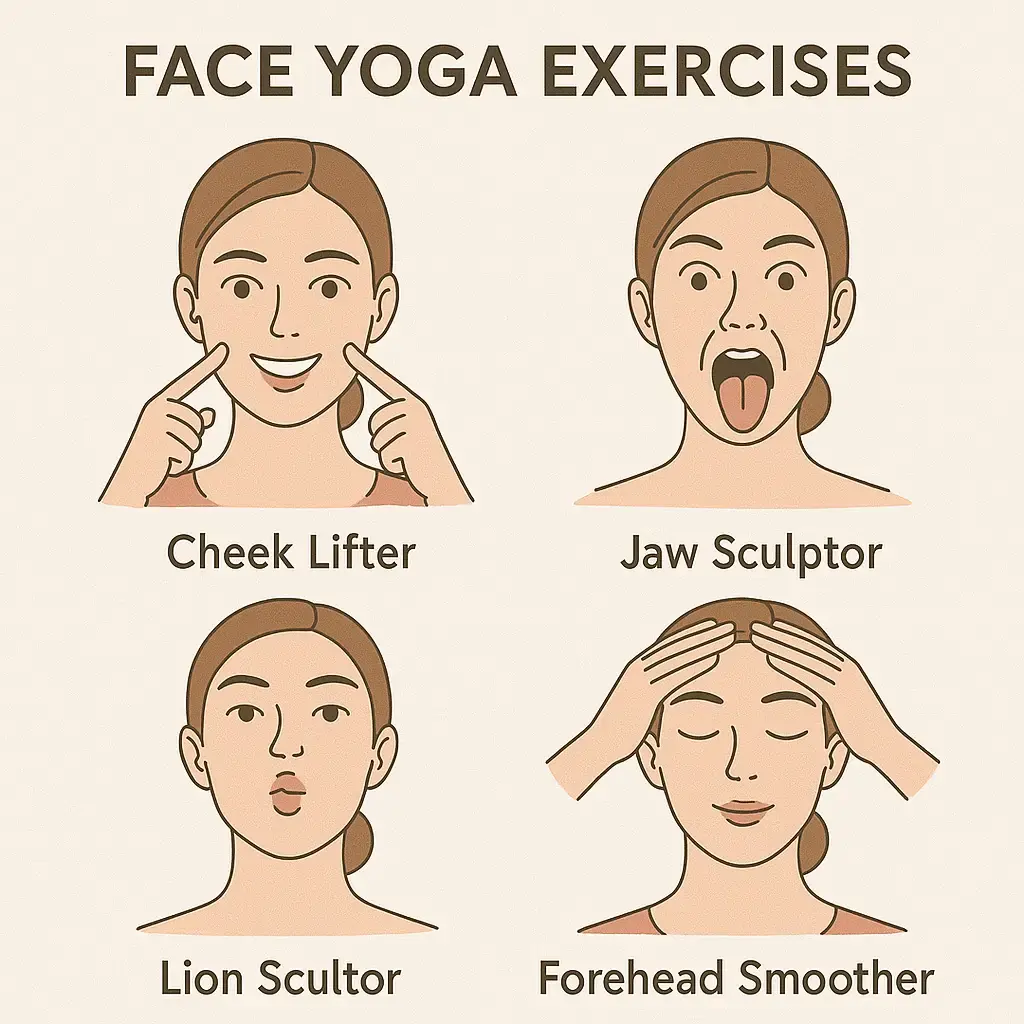
Here are some easy face yoga poses you can try at home. Aim to do them daily for at least 5–10 minutes.
1. The V (for Eye Bags and Droopy Eyelids)
– Place both middle fingers at the inner corners of your eyebrows.
– Put your index fingers at the outer corners of your eyebrows.
– Apply some pressure and look up, then squint.
– Repeat this 10 times.
2. Cheek Lifter
– Smile as wide as you can without showing your teeth.
– Place your fingers on the top part of your cheeks.
– Lift and hold your cheeks upward.
– Repeat this 10 times.
3. Jaw Sculptor
– Tilt your head back and gaze at the ceiling.
– Push your lower jaw forward to feel a nice stretch in your neck and jaw.
– Hold for 10 seconds and repeat 5 times.
4. The Lion Face (for Stress Release)
– Inhale deeply through your nose.
– Open your mouth wide, stick out your tongue, and exhale with a “haaa” sound.
– Repeat this 3–5 times.
5. Forehead Smoother
– Place your hands on your forehead with your fingers spread out.
– Gently sweep your fingers outwards to smooth the skin.
– Do this for 1 minute.
🕒 How Often Should You Do Face Yoga?
Consistency is crucial. For the best results, try to do face yoga:
– 5–6 days a week
– For at least 5–20 minutes a day
In some cases, people start noticing changes in just 2–4 weeks, but for lasting transformation, it usually takes about 2–3 months.