Fat Loss vs Weight Loss: Which One Should You Focus On?

Indian woman focusing on fat loss instead of weight loss at home

Trying to Lose Weight but Still Not Happy With Your Body?

Woman confused by scale weight despite exercising regularly

You start exercising.
You eat better.
The scale finally moves.

Yet when you look in the mirror, something still feels off.

This is where most people get stuck.

They chase weight loss, but what they actually want is fat loss. The problem is, these two are not the same — and focusing on the wrong one can slow your progress or ruin motivation.

Once you understand the difference, everything becomes clearer. Your workouts make more sense. Your diet feels less stressful. And results finally start showing in the right way.

Let’s break this down simply.

What Is Weight Loss?

Weight loss means a drop in your total body weight.
That number includes:

  • Body fat

  • Muscle

  • Water weight

  • Food weight

So when the scale goes down, it doesn’t always mean fat is gone.

For example, you may lose weight because:

  • You lost water

  • You ate less salt

  • You skipped meals

  • You lost muscle

This is why weight loss alone can be misleading.

What Is Fat Loss?

Fat loss means your body is burning stored fat for energy.

This is what most people actually want because fat loss:

  • Improves body shape

  • Reduces inches

  • Makes clothes fit better

  • Improves health markers

The scale may not change much during fat loss, especially if you’re also gaining muscle.

That’s why fat loss often feels slow — even when it’s working.

Fat Loss vs Weight Loss: The Real Difference
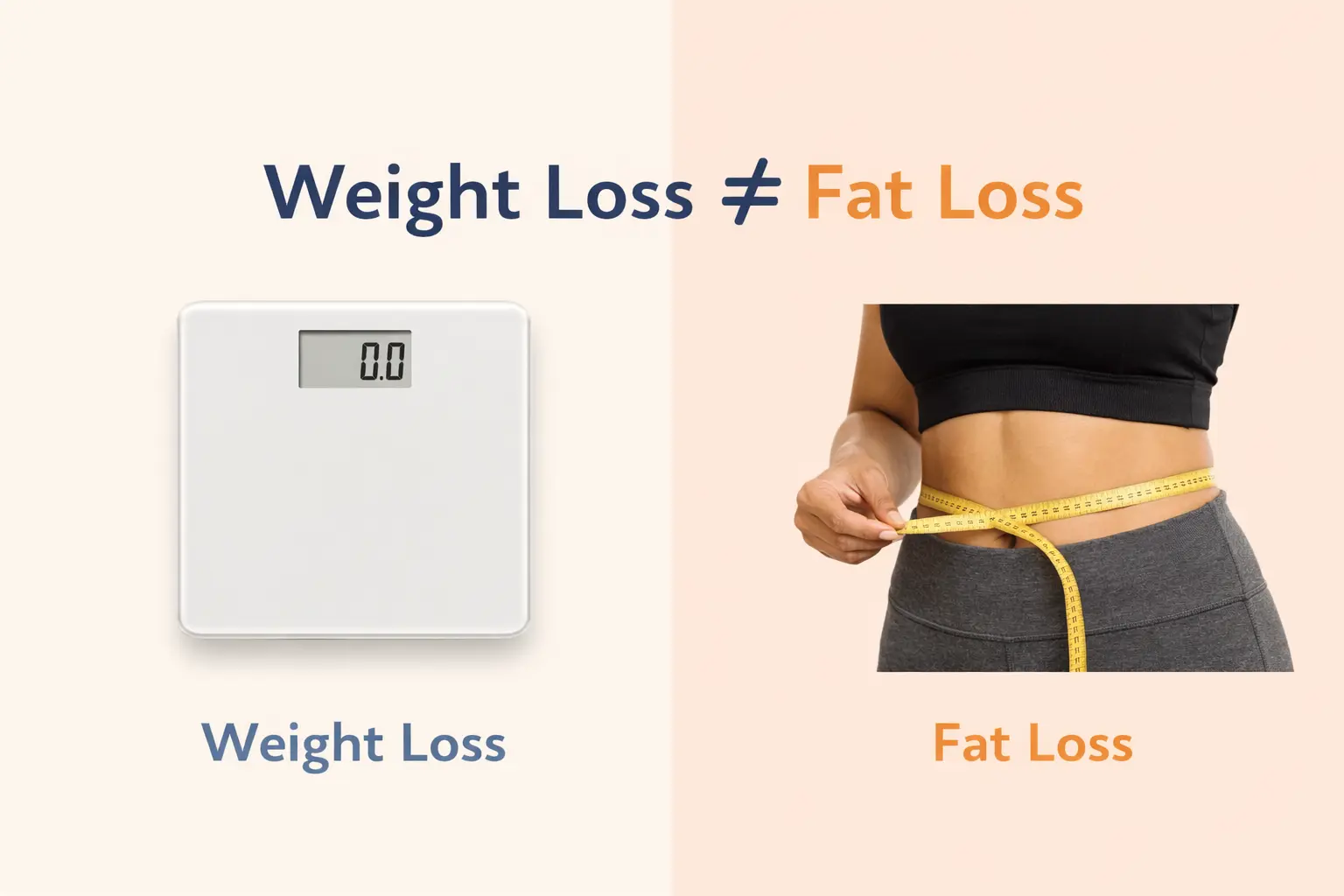
Difference between fat loss and weight loss explained visually

Here’s a simple comparison to make things clear:

AspectWeight LossFat Loss
Scale numberGoes down quicklyMay change slowly
Muscle impactCan reduce musclePreserves or builds muscle
Body shapeMay not improveImproves visibly
SustainabilityOften temporaryLong-term
Health benefitsLimitedHigh

This is why many people lose weight but still look “soft” or tired.

As explained by Medical News Today, fat loss and weight loss are different processes, which is why the scale doesn’t always reflect real body changes.

Why Focusing Only on Weight Loss Is a Mistake

The scale reacts fast.
Your body doesn’t.

When you chase weight loss:

  • You may eat too little

  • You may over-exercise

  • You may lose muscle

Losing muscle lowers your metabolism. As a result, fat loss becomes harder over time.

That’s why crash diets work briefly and then fail.

👉 You may also relate to this:
Why You’re Not Losing Weight Even After Daily Exercise

Signs You’re Losing Fat (Even If Weight Isn’t Changing)
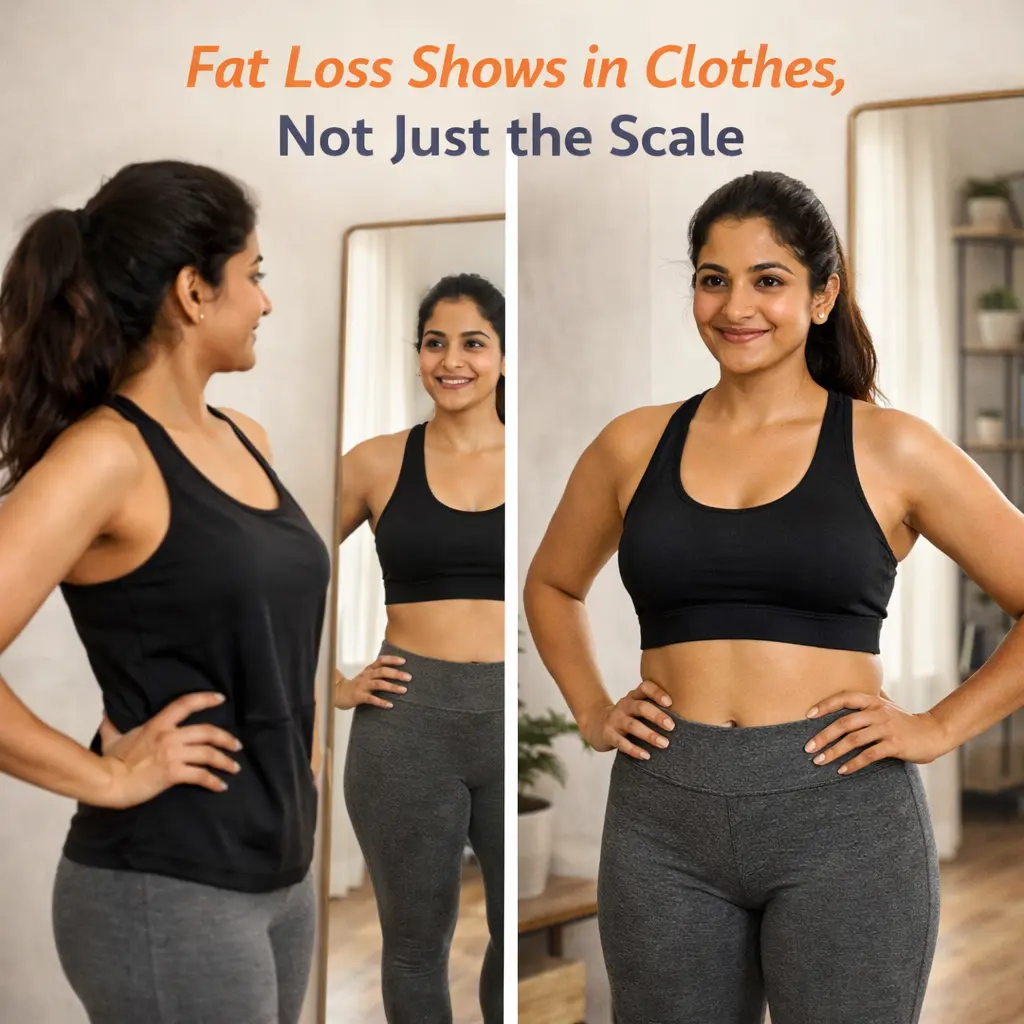
Fat loss progress visible through better fitting clothes

Stop checking only the scale.
Instead, look for these signs:

  • Clothes feel looser

  • Waist or hips measure smaller

  • Better muscle tone

  • Improved strength

  • Higher energy levels

These are stronger indicators than numbers alone.

Fat Loss Requires a Different Approach

Fat loss is about balance, not extremes.
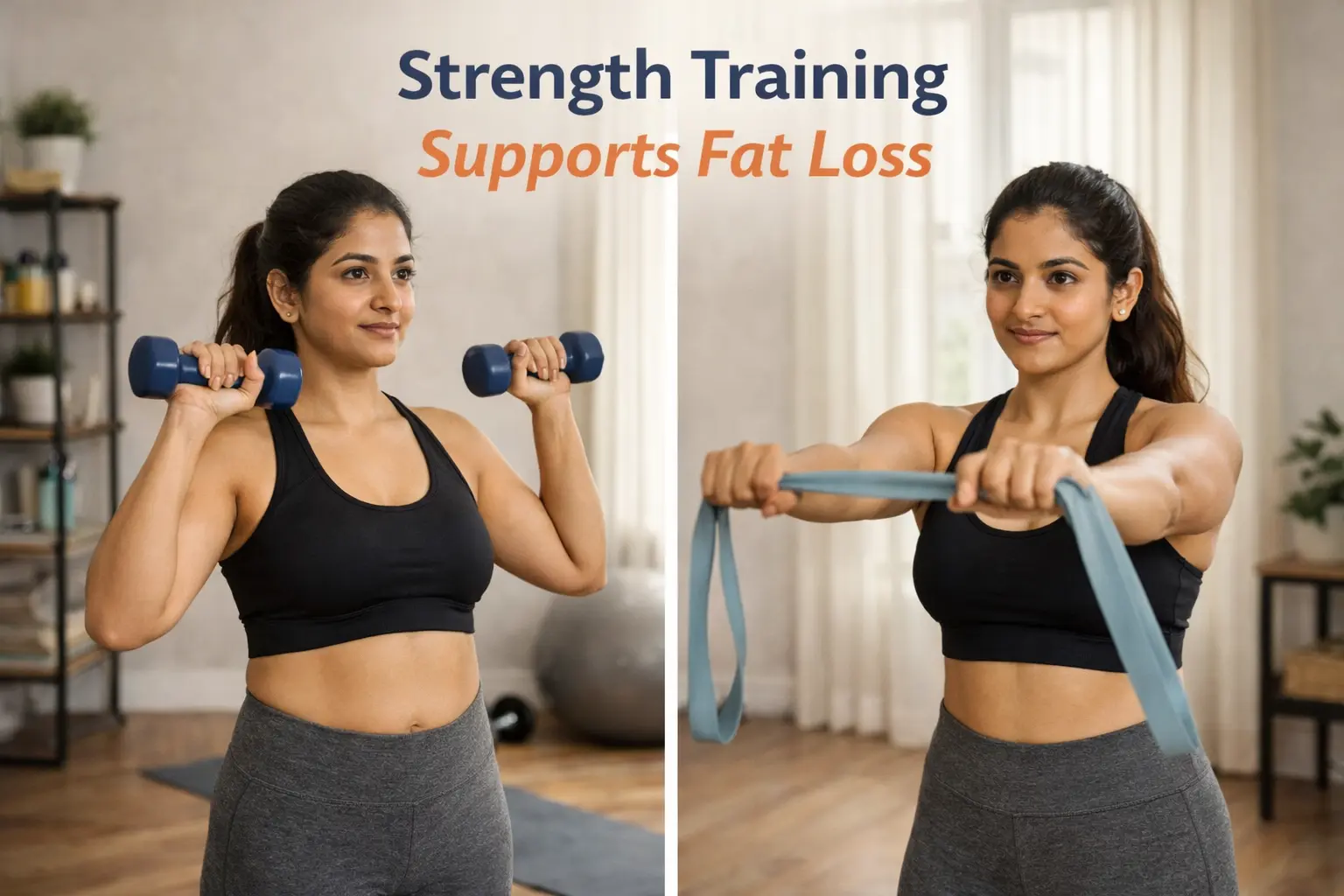
Strength training at home helps with sustainable fat loss

What supports fat loss:

  • Strength training

  • Moderate cardio

  • Enough protein

  • Proper recovery

  • Good sleep

What blocks fat loss:

  • Starving yourself

  • Excessive cardio

  • Poor sleep

  • Chronic stress

Your body needs the right environment to let go of fat.

Can You Lose Weight Without Losing Fat?

Yes. Very easily.

This happens when:

  • You lose water weight

  • You lose muscle

  • You restrict food too much

That’s why many people regain weight quickly. The fat was never addressed properly.

Why Fat Loss Is Slower but Better

Sustainable fat loss through consistent healthy habits

Fat loss takes time because your body protects stored fat. It sees fat as survival fuel.

However, once fat loss starts:

  • Results stay longer

  • Metabolism improves

  • Body shape changes

Slow progress is not failure. It’s stability.

Should You Ignore the Scale Completely?

No. But don’t let it control you.

Use the scale as:

  • One data point

  • Not the final judge

Instead, combine it with:

  • Measurements

  • Progress photos

  • How you feel

This gives a full picture.

Fat Loss vs Weight Loss: What Should You Focus On?

Here’s the honest answer:

👉 Fat loss should be your primary goal.
👉 Weight loss can be a side effect, not the target.

When you focus on fat loss:

  • Weight loss happens naturally

  • Body changes look better

  • Health improves

That’s the smarter long-term strategy.

Simple Fat Loss Tips That Actually Work

You don’t need perfection. You need consistency.

Start with these:

  • Eat protein with every meal

  • Move daily, but don’t exhaust yourself

  • Strength train 3–4 times a week

  • Sleep at least 7 hours

  • Be patient

Small actions done daily beat extreme plans.

Frequently Asked Questions

Yes. This is common, especially when muscle gain and fat loss happen together.

Visible changes usually appear in 3–6 weeks with consistent effort.

Cardio helps, but strength training is essential for sustainable fat loss.

Your body may retain water or build muscle initially. This is normal.

Beginners should focus on fat loss habits, not scale numbers.

Final Thoughts

Weight loss is easy to measure.
Fat loss is harder to see — but far more valuable.

If you stop chasing the scale and start supporting your body properly, results will feel calmer, healthier, and more permanent.

Focus on fat loss.
Let weight loss follow naturally.

Leave a Comment

Your email address will not be published. Required fields are marked *

Scroll to Top