
If you’ve ever felt overwhelmed by the different yoga styles out there — you’re not alone. From sweaty Hot Yoga classes to the meditative calm of Yin, there’s a yoga type for every mood, body, and goal.
But how do you know which one’s right for you? In this guide, we break down the 8 most popular types of yoga in simple terms — so you can pick what fits your body and lifestyle.
Understanding different types of yoga helps beginners choose a practice that matches their body, lifestyle, and goals.
According to Healthline, the benefits of yoga include improved flexibility, reduced stress, and better overall physical and mental health.
1. 🕉️ Hatha Yoga (One of the Most Popular Types of Yoga for Beginners)
What is Hatha Yoga?
Translated from Sanskrit, Hatha means “sun” (ha) and “moon” (tha), symbolizing balance. Hatha yoga emphasizes a gentle combination of postures (asanas) and breathing exercises (pranayama) to harmonize body and mind.

Detailed Benefits:
Improved flexibility: Slow posture holds gradually open tight muscles and joints.
Stress relief: Intentional breathing calms the autonomic nervous system.
Gentle strength building: Holding basic poses builds foundational muscle tone.
Typical Class Flow:
A 60-minute session often begins with breathing practices, followed by simple postures (like Mountain, Tree, Warrior), finishing with a 5–10 min relaxation pose (Savasana).
Real-Life Example:
Meena, a 50-year-old teacher, started Hatha yoga to ease shoulder pain. Within 6 weeks of practicing twice a week, she reports better posture, reduced headaches, and a calmer mind.
Friendly Gear:
2. 🌊 Vinyasa Yoga (Flow-Based Type of Yoga for Strength & Flexibility)
What makes Vinyasa special?
Also called “Flow Yoga,” Vinyasa links movement with breath into a creative, energetic sequence. You flow through a series of poses coordinated with inhales and exhales.

Detailed Benefits:
Cardio boost: Flowing sequences raise heart rate, burning 200–400 kcal/session.
Strength + coordination: Continuous transitions require stable core and intent focus.
Mental engagement: You stay present, reducing anxious thoughts.
Typical Class Flow:
Classes usually begin with Sun Salutations (Surya Namaskar) and move into balancing or seated poses. You’ll flow through Chaturanga → Upward/Downward Dog transitions and end with Savasana.
Real-Life Example:
Ravi, a 28-year-old architect, uses Vinyasa after work. He says it helps him sleep better and feel energetic the next day.
Friendly Gear:
3. 🔥 Ashtanga Yoga (Traditional & Structured Type of Yoga)
What is Ashtanga Yoga?
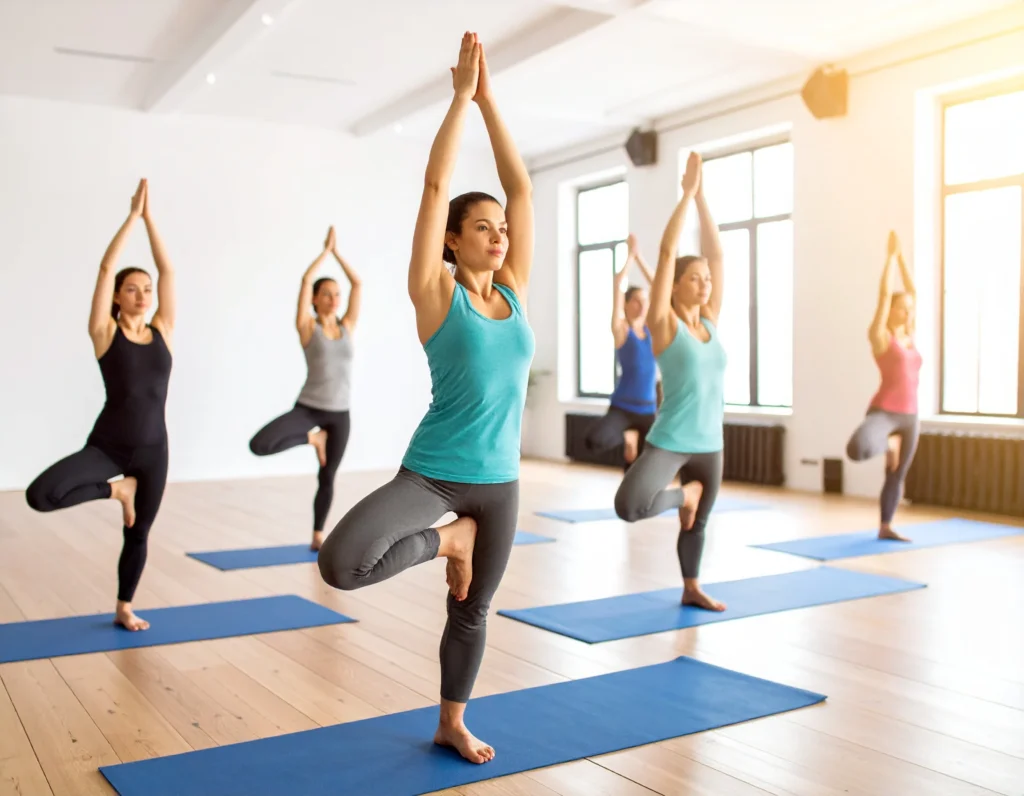
This type follows a fixed, six-series sequence based on breath and drishti (gaze). You repeat the opening Sun Salutations and follow a set series of postures.
Detailed Benefits:
Strong discipline: Repetition fosters mental focus and improvement.
Deep core strength: Demanding holds and transitions tone the whole body.
Detoxification: The vigorous flow and breathing help eliminate toxins.
Typical Class Flow:
You complete the First Series weekly until mastered, then proceed to the Second. Finish with seated cooling postures and a deep Savasana.
Real-Life Example:
Nitika, a returning athlete, found Ashtanga helped heal her lower back post-pregnancy and regain athletic strength.
Pro Tip:
Work with a certified teacher to learn proper form and alignment.
4. 🪷 Yin Yoga (Slow & Deep Stretching Type of Yoga)
What is Yin Yoga?
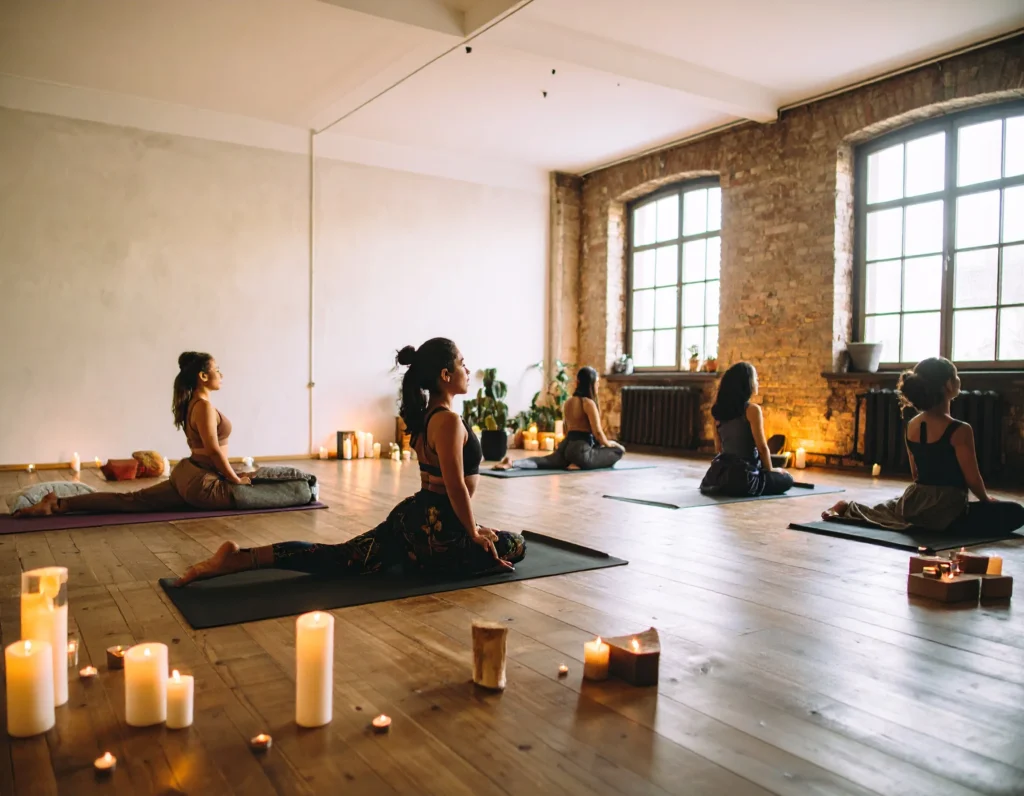
Yin focuses on deep connective tissues. You hold poses for 2–5 minutes, allowing your fascia, ligaments, and joints to stretch.
If you’re just starting, try this 10-minute morning yoga routine for beginners to build a consistent habit.
Detailed Benefits:
Improves joint mobility and reduces tension in areas like hips and lower back.
Slows mental chatter, enhancing mindfulness and presence.
Ideal recovery aid after intense workouts—restores the body and mind.
Typical Class Flow:
Fewer than 10 poses, each held for long periods. Restorative props often aid your posture.
Real-Life Example:
Smita, a marathon runner, uses Yin sessions after long runs. She says it drastically reduced her muscle soreness.
Friendly Gear:
5. 🧊 Hot Yoga (Heat-Based Type of Yoga for Detox)
What is Hot Yoga?
Practiced in rooms heated to 35–40°C, Hot Yoga (often Bikram’s 26+2) helps you sweat out toxins while deepening flexibility.

Detailed Benefits:
Promotes circulation: the heat makes blood flow easier.
Intense calorie burn: expect 350–500 kcal per session.
Stress reduction: sweating and breath work creates a meditative state.
Typical Class Flow:
26 specific poses + 2 breathing exercises performed in a heated room.
Real-Life Example:
Ananya, working in Mumbai’s heat, loves Hot Yoga. She says she feels vibrant, cleansed, and more flexible within three months.
Pro Tip:
Start with essential hydration and a sweat-absorbent mat (e.g., 8mm cushioned mat + sweat towel).
6. 🧘 Yoga Nidra (Relaxation-Based Type of Yoga)
What is Yoga Nidra?
Also called “yogic sleep”, it is practiced lying down with a guided meditation that guides you through body scanning and mental focus.

Detailed Benefits:
Deep relaxation even if you don’t sleep.
Reduces anxiety by shifting to parasympathetic activation.
Supports healing from trauma, fatigue, or nervous exhaustion.
Typical Class Flow:
You lie in Savasana while a teacher’s voice guides you to relax each body part and sense breathing.
Real-Life Example:
Priya, an overworked software developer, says a 20-minute Nidra session brings her more restored than an hour of sleep.
Friendly Gear:
7. 🧘♀️ Kundalini Yoga (Energy & Breath-Focused Type of Yoga)
What is Kundalini Yoga?
Focuses on awakening energy at the spine base using mantras, breath, movement, and meditation.

Detailed Benefits:
Enhances intuition and inner awareness.
Balancing chakras and mind-body harmony.
Clears mental blockages via breath and movement sequences.
Typical Class Flow:
Includes chanting (e.g., Long Ek Ong Chants), repetitive movements, breath control, and meditation.
Real-Life Example:
A yoga community member mentions feeling more centered and creative after consistent Kundalini sessions.
Pro Tip:
Choose certified trainers; the energetic nature can be intense.
8. 🧎 Restorative Yoga (Gentle Type of Yoga for Recovery)
What is Restorative Yoga?
Gentle, support-based yoga using props (bolsters, blocks, blankets) to hold poses for five minutes or more in complete relaxation.

Detailed Benefits:
Promotes deep physical and mental healing.
Reduces cortisol, and restores nervous balance.
Helps fatigue, burnout, chronic pain, and stress.
Typical Class Flow:
Fewer than 6 poses – long holds. Quiet environment with guided breathing or gentle music.
Real-Life Example:
After a tough year, Ritu found Restorative Yoga sessions felt like healing therapy — as soothing as a spa treatment.